The new math of executive roundtable events ROI for hotel groups
For hospitality executives, the economics of executive roundtable events ROI are shifting fast. When a single large trade show event quietly consumes a seven figure budget line, the question is no longer whether to attend but how many micro events you need to offset one mega expo on real business outcomes. The executive who signs that purchase order wants proof that each euro or dollar spent on events turns into measurable business, not just badge scans and branded lanyards.
Start with the full cost of a flagship hospitality trade show booth, not just the invoice for floor space. Industry data shows that the average cost per attendee for corporate conferences exceeds 300 dollars, and the registration fee typically represents only 40 to 60 percent of the true cost once staff time, travel, booth build and post event follow up are counted, which mirrors what most hotel groups see in their own event marketing dashboards. When you layer in senior leaders’ travel, opportunity cost of their time away from property or portfolio work, and the field marketing activation around the stand, the real cost per qualified customer profile often doubles what finance teams expect.
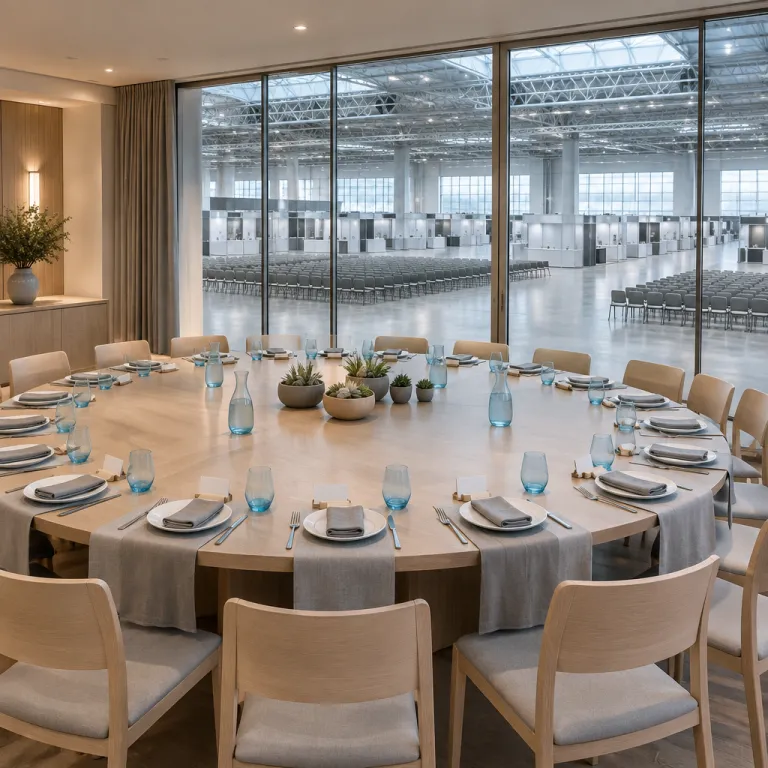
Now compare that with a 40 seat executive roundtable dinner designed for decision makers from your ideal customer segments. You are not paying for thousands of people to walk past your booth ; you are investing in one carefully moderated discussion where 20 to 40 executives sit long enough to share insights, debate best practices and explore real business problem solving. In that setting, the executive roundtable events ROI becomes visible in the room, because you can track which peer relationships move from first meeting to concrete business outcomes over the following quarter.
For hotel groups, this is not theory but a structural shift in how events work. The most sophisticated business leaders now treat executive roundtables and intimate meetings as core assets in their commercial strategy, not as side projects for the marketing équipe. When you model the numbers honestly, a portfolio of small, high intent events will often beat one giant expo on cost per qualified lead, even if the big show still matters for top of funnel awareness.
Why 40 qualified peers can outperform 4,000 badge scans
At a major hospitality expo, your stand may see 4,000 badge scans, but only a fraction of those people match your ideal customer profile. When you strip out students, suppliers, competitors and casual visitors, the number of true decision makers and senior leaders who fit your target groups often falls below 5 percent, which means your sales équipe spends months in post event meetings trying to separate signal from noise. That is a poor use of executive time when every portfolio review and asset level decision already competes for attention.
By contrast, a 40 person executive roundtable dinner or series of virtual roundtables can be curated so that nearly every seat is filled by executives who own a budget and a P&L. You are not chasing volume ; you are engineering a peer learning environment where business leaders from north America and other priority regions sit with your team for two or three hours of focused discussion on revenue management, loyalty, or group business recovery. In that room, the moderator can guide the conversation so participants share insights on what work best in their properties, while your brand quietly demonstrates thought leadership instead of delivering a hard sell.
Networking data backs this shift toward intimate formats. Industry research shows that 78 percent of organizers rate in person formats as their most impactful channel, with networking as the primary attendee motivator, which aligns with what hotel executives report when they evaluate event marketing performance. When you design executive roundtables where each peer at the table is a qualified prospect, the effective cost per qualified lead can drop below what you pay at a mega expo, even before you count the deeper relationships and faster decision cycles that follow.
For hospitality brands, this is why a mixed portfolio matters. Large events still play a role in brand visibility and category positioning, as explored in analyses of in person conference impact on long term marketing plans, such as the data driven perspectives on putting conferences back at the center of the marketing plan. Yet the executive roundtable events ROI case shows that if you reallocate even 20 percent of your big booth budget into a series of curated dinners and small meetings, you can materially improve both pipeline quality and the speed of real business conversations.
Building a full cost model: booth versus curated executive dinner
To compare a 4,000 person expo with a 40 seat executive roundtable, you need a full cost model that finance and marketing both trust. Start with direct event costs for the trade show booth : floor space, design and build, freight, on site services, sponsorships, and hospitality, then add staff travel, accommodation, per diem, and the value of executive time away from core work. Finally, include the hidden line items such as pre show event marketing, agency fees, and the CRM and sales operations effort required for post event follow up meetings.
For a curated executive roundtable dinner, the cost structure looks very different. You still have venue hire, food and beverage, production and a professional moderator, but you typically bring a smaller on site équipe and focus your field marketing spend on inviting a tight group of decision makers who match your ideal customer profile. When you divide total cost by the number of qualified executives in the room, the cost per qualified lead often undercuts the expo by a wide margin, especially when the discussion format encourages peer learning and best practices exchange that accelerates trust.
Hospitality groups that already use real time occupancy and revenue dashboards for hotel event performance can apply the same discipline to executive roundtable events ROI. By tracking which events generate meetings that move to proposal, then to signed contracts, you can attribute revenue to specific roundtables and compare that with the pipeline from large events. Over time, this data driven approach lets business leaders adjust the mix between mega expos, regional roadshows, virtual roundtables and intimate dinners, rather than relying on tradition or anecdote.
One practical step is to align your event marketing and revenue management teams on a shared set of KPIs. Instead of counting people who visit your stand, measure the number of executives who fit your customer profile, the depth of relationships formed, and the business outcomes generated within six to twelve months after each event. When you treat every executive roundtable as a mini profit center with its own P&L, the internal discussion about where to invest next becomes far more grounded in données and less driven by the allure of a large booth on the main aisle.
Where micro events fail, and how to build a balanced portfolio
Micro events and executive roundtables are not a silver bullet for every hospitality brand. A 40 person dinner will never match the reach, spectacle or top of funnel awareness that a flagship expo delivers, especially when you are launching a new brand or repositioning a portfolio in front of thousands of people. If you swing entirely away from large events, you risk weakening your presence in the wider ecosystem where partners, investors and media expect to see your logo and your senior leaders.
The real play is a balanced portfolio where each event format has a clear job. Large events and conferences anchor your category presence, while executive roundtables, virtual roundtables and small peer groups handle deeper relationship building, problem solving and deal acceleration with specific customer segments. In practice, that might mean using the big expo to fill the top of your funnel, then inviting the most relevant decision makers into follow up dinners or private meetings where you can work through their challenges in detail.
Micro events can also fail when they are treated as casual networking rather than structured business conversations. Without a strong moderator, a clear agenda and a focus on peer learning, the discussion can drift into generic talk that does not help executives make better decisions or justify the time away from their own meetings. Hospitality leaders should design each executive roundtable so that participants leave with at least two or three concrete best practices they can apply in their own work, which in turn makes them more likely to continue the relationship with your brand.
For hotel groups operating across north America and other regions, regional roadshows and intimate dinners can complement rather than replace the big expo presence. Analyses of the regional roadshow comeback in hospitality show how ten 50 person dinners can outperform one 5,000 person expo on cost per qualified lead when the invite list is tightly curated. The key is to define the business outcomes you expect from each format, then allocate budget and executive time accordingly, instead of defaulting to the largest stage every season.
A simple worksheet for executive roundtable events ROI and cost per qualified lead
Hospitality executives do not need a complex model to compare a 4,000 person expo with a 40 seat executive roundtable. A simple worksheet built in a spreadsheet can show whether your events work best as mega shows, micro dinners or a mix, as long as you capture the right données and keep the assumptions transparent. The goal is to translate every event decision into cost per qualified lead and, where possible, cost per euro or dollar of revenue generated.
Start by listing all direct and indirect costs for each event : venue, production, travel, staff time, agencies, event marketing, and any technology or virtual roundtables platform fees. Then, for each event, count only the number of executives who match your ideal customer profile and who engaged in a meaningful discussion with your team, whether in person or online. Divide total cost by that number to get cost per qualified lead, and then track how many of those leads convert into meetings, proposals and signed deals over the following months.
Next, add qualitative fields to capture the depth of relationships and the level of thought leadership you were able to demonstrate. Did the executive roundtable format allow peers to share insights and best practices that positioned your brand as a trusted partner in real business problem solving, or did the event feel like a one way sales pitch. Over time, patterns will emerge showing which types of events, topics and groups of people generate the strongest business outcomes for your hotel portfolio.
Finally, use this worksheet as a live tool in your annual planning meetings. Bring marketing, sales, revenue management and operations into the same discussion so that everyone sees how executive roundtables, large expos and hybrid events contribute differently to pipeline and profitability. When senior leaders can compare the cost per qualified lead of a 40 seat dinner with that of a 4,000 person expo on one page, the budget conversation shifts from opinion to evidence, and the executive roundtable events ROI case becomes hard to ignore.
FAQ
How many executive roundtables should a hotel group run each year ?
The right number depends on your markets, sales capacity and budget, but many hotel groups see strong results with a program of six to twelve executive roundtables per year across key regions. That cadence allows you to engage focused groups of decision makers without overloading your équipes or diluting the quality of each event. The priority is to keep every roundtable tightly curated around a clear theme and an ideal customer profile, rather than chasing volume.
What makes an executive roundtable more effective than a standard networking reception ?
An executive roundtable is built around structured discussion, a defined topic and a skilled moderator, while a reception relies mostly on unstructured mingling. In a roundtable, peers share insights, compare best practices and work through real business challenges, which creates more trust and accelerates decision making. For hospitality brands, that depth of engagement usually translates into higher quality opportunities than casual conversations over cocktails.
How should we measure success for a 40 seat executive dinner ?
Success metrics should go beyond attendance and satisfaction scores to include cost per qualified lead, number of follow up meetings booked and revenue influenced within a defined period. Many hotel groups also track softer indicators such as new relationships formed between business leaders, invitations to participate in future thought leadership initiatives and references to the event in later negotiations. When these données are captured consistently, they provide a clear view of executive roundtable events ROI over time.
Do virtual roundtables deliver comparable ROI to in person dinners ?
Virtual roundtables can deliver strong ROI when travel budgets are tight or when you need to reach executives across multiple regions quickly. They usually cost less per participant and can still support peer learning and problem solving if the format is well moderated and the group size remains small. However, in person dinners often create deeper relationships and faster business outcomes, so most hospitality brands benefit from a mix of both formats.
How can smaller hotel brands compete with larger groups on executive events ?
Smaller brands can compete by focusing on highly targeted executive roundtables where every participant fits a precise customer profile and the topic is tightly aligned with their strengths. Instead of trying to match large groups on booth size at major expos, they can invest in intimate events that showcase their agility, expertise and ability to tailor solutions to specific business needs. This approach often yields a lower cost per qualified lead and stronger long term relationships with key decision makers.