Why first party event data is the highest ROI asset in hospitality
For hospitality trade shows and investment forums, the most valuable asset is not the stage, the stand, or the sponsored coffee bar. The real engine of first-party event data ROI is the granular data collected about every customer, prospect, and partner who moves through your floor plan and your hosted buyer lounge. When organisers and exhibitors treat each event as a live laboratory for customer data and conversion events, the business impact of the show extends far beyond the closing keynote.
First party data from events delivers 72 % higher ROI than alternative channels when the attribution loop is closed from badge scan to purchase and booked room. That uplift only happens when every data point — from session dwell time to website visits triggered by event content — is captured, structured, and routed into a coherent data strategy that your commercial équipe can actually use. Trade shows that achieve the benchmark of 20,98 dollars in revenue for every dollar spent do so because they treat event data as essential infrastructure, not as a post event reporting chore.
For hospitality brands, this means reframing experiential events as always-on experiential marketing engines that feed your CRM with qualified customer profiles. A corridor conversation about a new eco friendly lodging concept becomes a measurable data point when the badge scan, meeting note, and follow up email engagement are stitched into one customer journey. When that same contact later completes a group booking on your website, the attribution model must recognise the original event touchpoint so leadership finally sees the true ROI of the stand, the sponsorship, and the brand experiences you designed.
Defining first party event data for hospitality decision makers
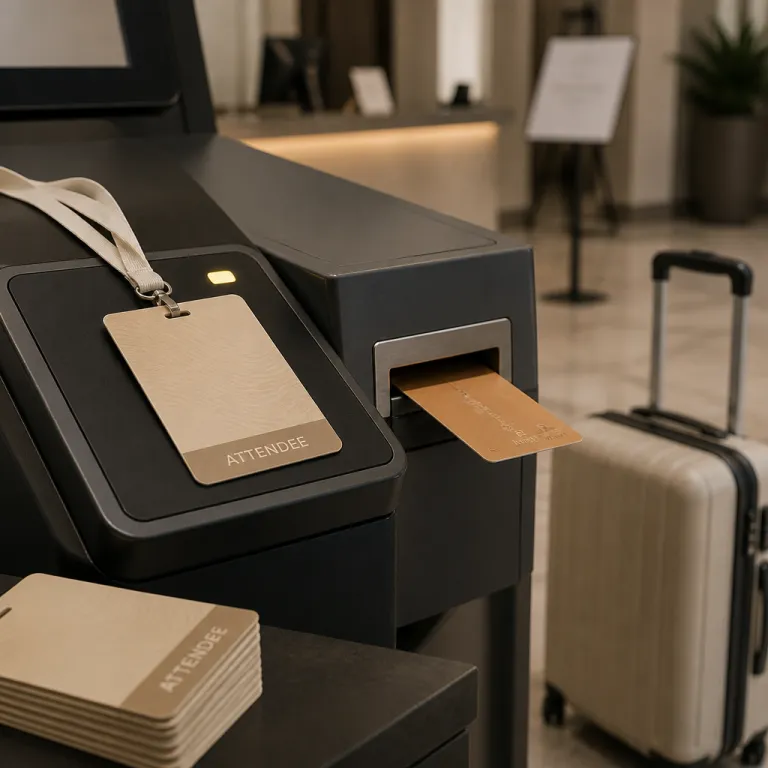
First party event data in hospitality covers every signal you capture directly from attendees during registration, on site interactions, and post event follow up. At a large investment forum or a regional hotel technology salon, this includes badge scans, session check ins, dwell time in experiential zones, hosted buyer meetings, and any customer service interactions logged in real time. When these data points are matched to existing customer data in your CRM, they transform anonymous traffic into actionable customer profiles that your revenue team can prioritise.
For organisers and exhibitors, the most powerful party data assets are often the least glamorous, such as clean registration forms, opt in preferences, and structured notes from sales meetings. Each of these elements becomes a building block in your broader data strategy, especially when combined with website behaviour and content engagement after the event. Hospitality investors evaluating a brand’s events portfolio increasingly ask how much data collected at flagship events actually converts into measurable business outcomes, not just how many badges were printed.
First-party event data ROI also depends on how well you separate what you own from what third party platforms control. When you rely only on a marketing automation tool’s default dashboards, you risk losing visibility into the full customer journey from event to purchase and repeat stay. Serious players now invest in data clean rooms or lighter clean room style environments where event data, customer data, and media exposure can be joined safely under strict privacy rules, allowing more precise attribution without compromising trust.
For large scale investor gatherings, the question is no longer whether the forum matters but how precisely it moves the pipeline. That is why the continued relevance of a 2 200 attendee investment forum is best understood through an attribution lens that connects each meeting and each session to later deals and portfolio performance, rather than through raw attendance alone. When your team can show that a single event generated a cluster of high value purchase decisions and long term partnerships, the conversation with leadership about budget shifts from defence to strategic expansion.
Building the attribution loop from badge scan to booked room
The core challenge for hospitality event professionals is building an attribution loop that starts with a badge scan and ends with a booked room or signed management contract. That loop begins with disciplined data collection on site, where every interaction is treated as a potential conversion event and tagged accordingly in your systems. When a prospect spends significant time in an experiential marketing zone showcasing your new extended stay concept, that dwell time and engagement level should be logged as a strong intent signal, not just a vanity metric.
From there, the data must flow into your CRM and data marketing stack in near real time, enriched with firmographic and behavioural information to create robust customer profiles. A hotel group that routes event data into a clean room environment can safely join it with digital campaign exposure, website visits, and email engagement to understand which combination of touchpoints actually drove the final purchase decision. This is where first-party event data ROI becomes visible, as you can attribute revenue not only to the last click but to the corridor conversation at 18 h 00 that led to the partnership nobody planned.
Most attribution models break down when the event team hands off a spreadsheet to sales and hopes for the best. To avoid that gap, leading organisers design their experiential events and micro events around clear conversion events, such as booking a site inspection, requesting a proposal, or scheduling a follow up with revenue management. As recent analysis of why micro events outperform mega conferences on pipeline conversion shows, smaller formats often generate cleaner data and higher quality engagement because every interaction is intentional, logged, and followed through.
Why the first 72 hours after the event decide your ROI
For most hospitality trade shows, the first 72 hours after the booth closes determine whether first-party event data ROI will be impressive or invisible. This is the window when memories are fresh, intent is high, and customers still associate your brand experiences with the conversations they just had in your stand or suite. If your équipe waits a week to follow up, the customer journey fragments, and your carefully planned experiential marketing loses its momentum.
Operationally, this means your data strategy must include a precise post event playbook that activates as soon as the last session ends. Sales and marketing teams should receive prioritised lead lists based on engagement scores that combine data points such as session attendance, meeting notes, and content downloads from your website. When those teams respond in real time with tailored content and relevant offers, the probability of purchase increases, and the attribution model can clearly link specific events to measurable business outcomes.
The 72 hour window is also when data quality either improves or decays. If your team cleans and enriches customer data immediately, resolving duplicates and clarifying customer profiles, you can feed accurate information into your clean rooms and analytics tools. When this work is delayed, privacy compliant consent records become harder to track, and the connection between event engagement and later conversion events weakens, making it much harder to prove ROI to sceptical investors and hotel owners.
The measurement stack that turns event spend into board level evidence
Hospitality leaders who have reduced the difficulty of proving event ROI from 70 % to 40 % did not simply buy a new dashboard. They built a measurement stack that connects on site data capture, CRM routing, clean room level analytics, and post event reporting into one continuous system. At the base of this stack sits reliable data collection infrastructure, from badge scanners and lead retrieval apps to meeting booking tools that log every interaction as structured data.
Above that, a robust CRM and marketing automation layer translates raw data into actionable customer profiles and segments. This is where customer service notes, sales feedback, and website behaviour are combined with event engagement to create a unified view of each customer and account. When this unified view is pushed into analytics tools or data clean rooms, commercial teams can run attribution models that show how specific events, sessions, and brand experiences contributed to revenue, RevPAR uplift, or new management contracts.
The final layer is executive ready reporting that speaks the language of business outcomes, not just marketing metrics. Boards and investors want to see how each event influenced purchase decisions, accelerated deal cycles, or improved customer lifetime value, not just how many customers visited your stand. When your reports can show that first-party event data ROI outperforms third party channels by a wide margin, budget conversations shift from “why are we spending this ?” to “which events should we double down on next season ?”.
Designing hospitality events that maximise first party data and guest trust
Maximising first-party event data ROI in hospitality starts long before the first badge is printed. It begins at the event design stage, where organisers decide which experiential zones, content formats, and networking structures will generate meaningful engagement and measurable data points. When you design brand experiences that encourage guests to share preferences, challenges, and purchase intentions willingly, you create a richer data party environment without compromising privacy or guest comfort.
For example, a hotel group hosting an investment summit might integrate sustainability focused sessions and eco friendly lodging showcases that naturally lead attendees to interact with digital kiosks and personalised content. Each interaction becomes a data collection moment, feeding into customer profiles that later inform both marketing campaigns and product development decisions. Linking these design choices to broader hospitality trends, such as the rise of eco responsible lodging solutions in professional events, helps ensure that your experiential marketing feels relevant rather than intrusive.
Trust is the non negotiable foundation of any data strategy in hospitality, especially when dealing with high value customers and investors. Clear communication about how customer data will be used, transparent opt in mechanisms, and visible respect for privacy standards all contribute to stronger engagement and higher quality data collected. When attendees see that your brand treats their information with care and uses it to improve customer service and event experiences, they are more likely to participate in future events and conversion events, reinforcing the long term business value of your first party data assets.
Key statistics on first party event data ROI in hospitality
- First party data from events delivers 72 % higher ROI than alternative channels when measured correctly, according to analysis by Vendelux, highlighting the financial advantage of owning your event data rather than relying on third party sources.
- Trade shows generate an average of 20,98 dollars in revenue for every 1 dollar invested when event measurement is robust, based on Vendelux benchmarks, which underscores the potential business impact of a well instrumented hospitality event portfolio.
- Event teams reporting difficulty in proving ROI to leadership dropped from 70 % to 40 % within one cycle, according to Bizzabo research, after adopting more advanced attribution models and integrated data strategies.
- Despite these gains, 98 % of event teams still struggle to fully justify event spend, Bizzabo notes, which shows how much room remains for hospitality organisers and exhibitors to improve their attribution loops.
- Hospitality brands that connect event engagement data with CRM and website behaviour in near real time consistently report higher conversion rates on post event campaigns, indicating that speed of data activation is a critical driver of first-party event data ROI.
FAQ about first party event data ROI in hospitality events
What exactly counts as first party event data for a hotel brand ?
First party event data for a hotel or resort brand includes any information collected directly from attendees through registration forms, badge scans, session check ins, meeting notes, surveys, and digital interactions with your event content. When this data is linked to existing customer records in your CRM, it becomes a powerful asset for understanding the customer journey and improving both marketing and customer service. The key is that you, not a third party platform, control and store this data under clear privacy policies.
How can we connect badge scans to actual room bookings and revenue ?
To connect badge scans to bookings, you need a clear attribution model that links event identifiers to CRM records and then to your reservation system. Each badge scan should create or update a customer profile with event engagement data, which your revenue and sales teams can track through the sales funnel until a purchase or contract is signed. When the booking occurs, the system attributes a portion of the revenue back to the originating event, allowing you to calculate first-party event data ROI accurately.
Why do most event attribution efforts fail in the first 72 hours ?
Most attribution efforts fail because teams do not act quickly enough on the data collected during the event. If leads are not enriched, prioritised, and routed to sales within the first 72 hours, interest cools, details are forgotten, and the link between event engagement and later conversion events becomes harder to trace. A disciplined post event process with real time data flows and clear ownership is essential to avoid this breakdown.
Do we really need a data clean room for our hospitality events ?
A full scale data clean room is not mandatory for every organiser, but clean room style practices are increasingly valuable for larger hospitality portfolios. When you want to combine event data with media exposure, website behaviour, and third party datasets under strict privacy rules, clean rooms provide a controlled environment for analysis. For smaller teams, adopting similar principles — such as clear governance, limited access, and anonymised data joins — can still improve attribution quality and trust.
How should we measure success beyond attendance and badge scans ?
Success for hospitality events should be measured through business outcomes such as qualified opportunities created, deals accelerated, room nights booked, and long term partnerships initiated. Badge scans and attendance are useful inputs, but the real KPIs relate to engagement depth, conversion events, and revenue attributed to the event over time. By aligning your measurement framework with commercial objectives, you turn first party event data into board ready evidence rather than a stack of vanity metrics.