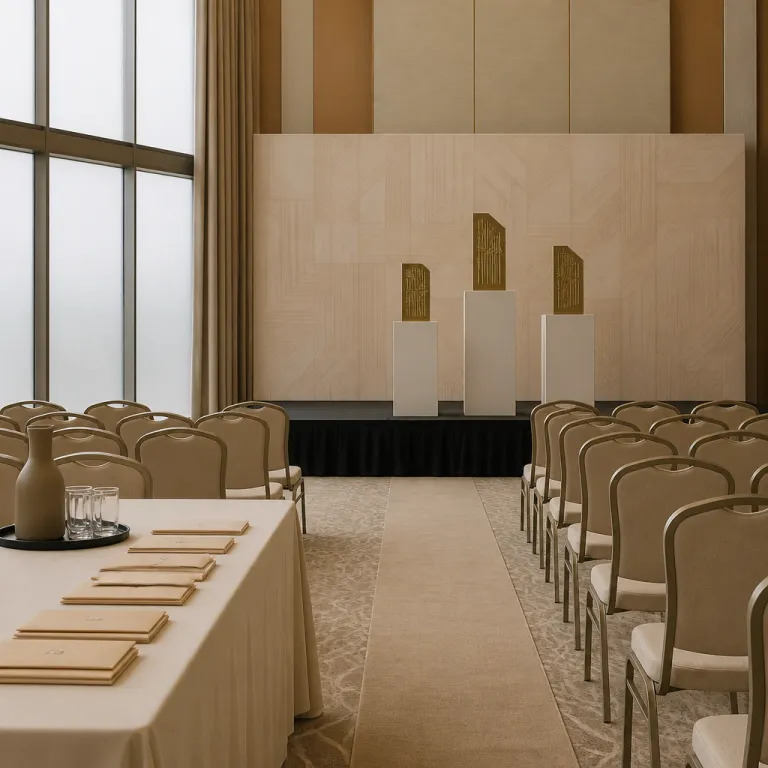
From experiment to expectation: when AI becomes an award category
The moment a jury adds “Best Use of AI” to hotel marketing awards 2026, the technique stops being a side project and becomes table stakes. For commercial leaders tracking the hospitality industry, that single award category signals that artificial intelligence has moved from pilot tests in one hotel to a measurable driver of revenue, guest experience and brand recognition across many hotels. In a sector where every luxury hotel and international hotel group fights for global recognition, the awards ceremony now functions as a public benchmark of AI maturity rather than a simple celebration of creative excellence.
For organisers of conferences and summits, this shift reshapes how hospitality design, marketing awards and hotel awards are programmed on stage. Panels that once asked whether AI will matter now dissect which award winning use cases actually moved ADR, RevPAR and direct booking share in the most competitive hotels resorts. The hospitality industry audience in the room is no longer impressed by vague promises ; they want the specific data points that turned an AI powered campaign into one of the winners finalists at a major awards ceremony.
For exhibitors and partenaires technologiques, the presence of AI focused award categories in hotel marketing awards 2026 changes the brief for every stand, demo and corridor conversation. Technology vendors must show how their platforms support interior design storytelling, social media orchestration and personalised guest experiences at scale, not just how they automate emails. Investors and décideurs hôteliers read the list of winners and award categories as a live map of where budgets will flow next across global hospitality and where the best positioned hotels will capture the next wave of demand.
Corinthia Hotels and AI personalisation at scale in luxury
Corinthia Hotels taking the “Innovative Use of AI in Marketing” title for “Every visit, its own story” at the HMA hotel marketing awards 2026 is more than a creative win. For any luxury hotel brand, that award shows that AI driven hotel marketing can finally deliver personalised guest experience journeys without breaking the operational backbone of a complex international hotel portfolio. In a crowded luxury travel market, this kind of award winning work becomes the reference point for what excellence in AI powered hospitality design and guest experiences really looks like.
What stands out in the Corinthia Hotels campaign is how AI is used to orchestrate the full guest experience rather than a single touchpoint. From the first social media impression to the post stay email, the system adapts content, offers and interior design imagery to the individual guest, while still protecting the coherence of the global hospitality brand. For revenue and commercial directors benchmarking against the best, this HMA award proves that AI can support both rate integrity and brand equity when it is embedded into a clear marketing strategy rather than treated as a gadget.
For event strategists planning conferences around hotel awards and marketing awards, the Corinthia Hotels case should sit at the centre of any session on AI maturity. It shows how a luxury hotel group can use AI to connect design awards level visual storytelling with measurable commercial outcomes across multiple hotels and hotels resorts. When you build your fall conference shortlist using a structured decision framework for hotel commercial teams, as outlined in this analysis of how commercial leaders pick the three events worth the travel budget, you should prioritise events where Corinthia style AI personalisation is unpacked in operational detail.
Reading award categories as a roadmap for budgets and skills
For organisers of salons and hospitality industry summits, the structure of hotel marketing awards 2026 is itself a strategic document. Each award category, from AI innovation to social media excellence and interior design storytelling, reveals where the best hotel marketing teams are already investing and where the next capability gaps will open. When categories such as “Innovative Use of AI in Marketing”, “Creative Excellence”, “Best Hotel Marketing Team” and “Rising Star in Hotel Marketing” sit alongside classic hotel awards, they collectively map the future skill set of global hospitality marketing.
Commercial leaders should read these award categories the way they read a market share report. A strong presence of AI, data, guest experience design and cross channel marketing awards indicates that the hospitality industry is shifting budgets from pure media buying to integrated experience design. For investors and partenaires technologiques, the winners and winners finalists list across these awards categories highlights which hotels, hotels resorts and international hotel groups are building the most advanced marketing infrastructure and which hospitality design partners are likely to attract the next wave of capital.
For conference producers, this roadmap has direct implications for programme design, speaker selection and exhibitor curation. Sessions on workforce development, for example, must now address how marketing teams recruit, train and retain talent capable of working across AI, social media, interior design storytelling and data driven guest experiences, not just classic brand management. That is why events where the conference floor becomes a career fair, as analysed in this deep dive into workforce programming at hospitality events, are increasingly aligned with the competencies highlighted by hotel marketing awards 2026.
What the HMA winners reveal about team structures and leadership
The HMA recognition of London Hilton on Park Lane as Best Hotel Marketing Team sends a clear signal about how high performing hotel marketing organisations are structured. In a global hospitality environment where AI, social media and experiential travel campaigns intersect, the award suggests that cross functional collaboration now matters more than isolated channel expertise. For organisers of professional experiences and hospitality industry conferences, this kind of award winning team becomes the benchmark case study for panels on organisational design and leadership.
Similarly, Horwood House Hotel winning the HMA Creative Excellence Award for “The Butterfly Resort” shows how even a single hotel, rather than a vast international hotel chain, can compete at the highest level of design awards and marketing awards. The campaign blends hospitality design, interior design cues and narrative driven guest experiences into a coherent story that resonates across both digital and on property touchpoints. For exhibitors and design partners, this proves that smaller hotels and hotels resorts can achieve global recognition when they align design, marketing and operations around a single, emotionally resonant concept.
The Rising Star in Hotel Marketing award for May Facey, Senior Manager Marketing EMEA at Marriott International, underlines the importance of individual leadership within large hotel marketing structures. It shows that the best international hotel groups are not only investing in technology but also in the people who can translate AI, social media and data into concrete guest experience improvements. For conference organisers, featuring award winning leaders like these on stage turns an abstract discussion about hotel marketing awards 2026 into a practical masterclass on how to build and retain a high performing marketing équipe.
How mid market teams can reverse engineer lessons from the winners
Not every hotel or group of hotels resorts has the budget of Corinthia Hotels or Marriott International, yet mid market players can still extract powerful lessons from hotel marketing awards 2026. The first step is to treat the list of winners and winners finalists as a dataset, breaking down each award into its core components ; objective, audience, channels, creative idea and measurable outcomes. For revenue and commercial directors, this reverse engineering process turns an awards ceremony into a practical benchmarking tool for their own hotel marketing roadmap.
Mid scale properties should pay particular attention to how award winning campaigns integrate social media, on property hospitality design and guest experience design into a single narrative. Often, the best work does not rely on expensive technology but on a clear understanding of the guest journey and a disciplined use of data to personalise offers and content. By mapping these elements against their own constraints, hotels can prioritise a few high impact initiatives that align with their brand, whether that means a focused design awards level refurbishment of a lobby or a tightly targeted campaign for a specific travel segment.
For organisers of salons and expos, there is an opportunity to build workshops where mid market teams actively deconstruct hotel awards submissions and marketing awards case studies. Rather than passively listening to panels, participants work through the numbers, the creative assets and the operational implications of each award winning campaign. When combined with insights from experiential hospitality events such as those analysed in this report on how Indian yoga retreats are reshaping experiential hospitality events, these sessions help translate global recognition into locally actionable strategies.
Design, experience and recognition: aligning physical and digital touchpoints
One of the quieter messages in hotel marketing awards 2026 is how tightly the best campaigns align physical design and digital storytelling. Award winning work increasingly treats interior design, hospitality design and social media content as parts of a single guest experience system rather than separate disciplines. For organisers of hospitality industry conferences, this convergence demands programming that brings designers, marketers and technologists onto the same stage instead of siloed tracks.
In practice, this means that a luxury hotel aiming for global recognition in both design awards and marketing awards must choreograph every detail, from lobby lighting to Instagram framing. The best hotels and hotels resorts use design to create moments that guests naturally want to share, then support those moments with hotel marketing that amplifies user generated content and feeds it back into AI models for better personalisation. When such a strategy wins an award, it validates the idea that guest experiences are now co created by guests, staff and algorithms working together.
For investors and partenaires technologiques, this alignment of design, experience and recognition changes how they evaluate projects and partnerships. A hotel renovation that only upgrades rooms without considering social media storytelling or AI ready data capture will struggle to compete with properties that design for both award categories and operational efficiency. As hotel marketing awards 2026 continue to highlight integrated campaigns, the market will reward hotels that treat every renovation, every ceremony and every guest interaction as part of a long term strategy for excellence and global hospitality leadership.
Key figures on hotel marketing awards and AI maturity
- According to HospitalityNet coverage of the HMA celebration, Corinthia Hotels, Horwood House Hotel, London Hilton on Park Lane and Marriott International marketing leader May Facey were all recognised across AI innovation, creative excellence, team performance and rising talent, illustrating how awards now span technology, creativity and leadership in one integrated view.
- Industry surveys from Skift and other travel research firms have reported that more than half of global hospitality brands are actively investing in AI driven personalisation for marketing and guest experience, a trend reflected in the creation of AI specific award categories at major hotel awards.
- Benchmarking studies in the hospitality industry indicate that hotels which integrate AI into their marketing stack can see double digit uplifts in direct booking conversion rates compared with properties relying solely on traditional campaigns, making AI a central theme in many marketing awards submissions.
- Event organisers report that conference sessions focused on AI, data and guest experiences consistently achieve higher attendance and engagement scores than generic marketing panels, which is pushing more awards ceremonies and summits to foreground AI and innovation in their programmes.
FAQ about hotel marketing awards and AI driven recognition
How should hotel teams use hotel marketing awards 2026 as a benchmarking tool ?
Hotel teams should analyse each award category, winner and finalist to understand which capabilities, from AI personalisation to social media storytelling, are being rewarded and then map those capabilities against their own current strengths and gaps. This turns the awards list into a practical roadmap for future investments in technology, skills and guest experience design.
Why does an AI category in hotel awards matter for commercial performance ?
An AI category signals that judges and peers now see artificial intelligence as a core driver of measurable outcomes such as direct bookings, upsell revenue and guest satisfaction, not just as a novelty. For commercial leaders, this validates budget allocations toward AI tools and talent that can demonstrably improve both revenue and guest experiences.
Can mid market hotels compete with luxury brands in marketing awards ?
Mid market hotels can absolutely compete when they focus on clear positioning, disciplined use of data and tightly executed campaigns that align on property experience with digital storytelling. Judges often reward originality, coherence and measurable impact over sheer budget size, which opens space for smaller properties to win recognition.
What should conference organisers change in response to AI focused award categories ?
Conference organisers should design sessions that move beyond theory to unpack award winning AI campaigns in operational detail, including data architecture, team structure and change management. They should also curate exhibitors and partenaires technologiques who can demonstrate real world implementations aligned with the capabilities highlighted by the awards.
How do design awards intersect with marketing awards in hospitality ?
Design awards and marketing awards increasingly intersect because interior design, hospitality design and digital storytelling now shape a single continuous guest journey. Properties that integrate physical spaces, brand narrative and data driven personalisation tend to perform strongly in both types of recognition, reflecting a holistic approach to excellence.