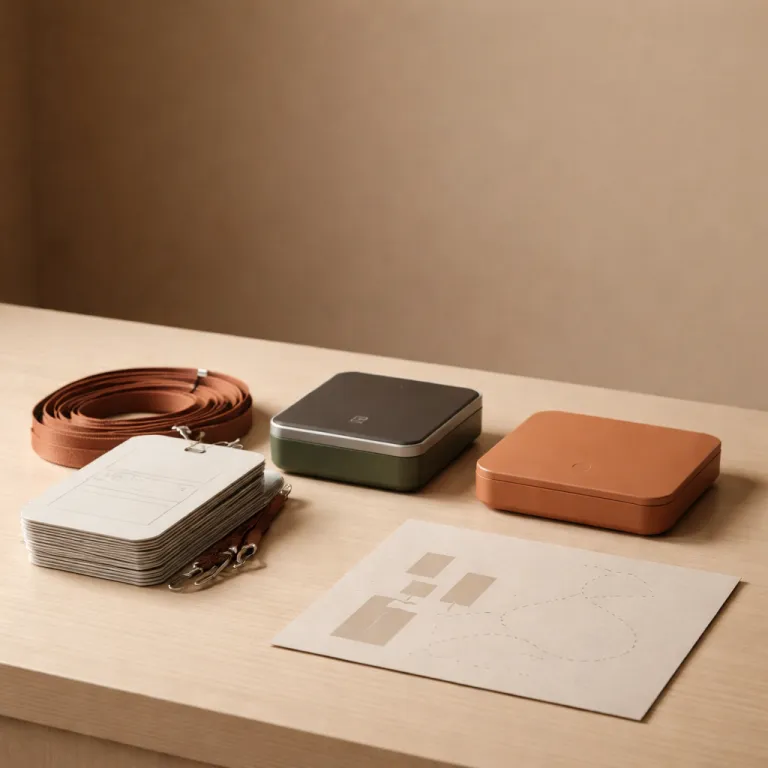
From badge scan to intent signal: why attendee intelligence now defines sponsor value
For hospitality trade shows, the rise of event attendee intelligence and smart badges signals a structural shift in how value is measured. Enterprise events using connected badges report measurable improvements in lead quality and follow-up speed, and that changes the conversation between event organizers, hotel brands and technology sponsors about what a successful event really delivers. The quiet revolution is that every event badge has become a sensor for intent, not just a plastic pass for venue access.
Traditional badge design focused on logo visibility, name legibility and basic access control, while modern smart badges embed RFID or Bluetooth Low Energy technology to capture granular attendee behavior data in real time. At large hospitality events, those devices track session attendance, corridor dwell time near a stand, and repeated returns to a product demo, which together form a behavioral profile that goes far beyond a simple lead scan. That is why conferences and trade shows worldwide are moving from passive badges to active digital credentials that feed live data streams into event management platforms and sponsor dashboards.
For sponsors, the difference between a scanned event badge and a rich intent profile is the difference between a cold list and a prioritized pipeline of qualified leads. When event organizers structure their event tech stack around attendee intelligence, they can sell sponsorship packages based on guaranteed engagement metrics, not just estimated footfall. In that model, event badges and conference passes become the core of a measurable event experience where every interaction is tied to revenue attribution rather than vanity metrics. Takeaway for sponsors: ask organizers how badge data will be used to score and prioritize leads before you commit budget.
How intent signals go beyond demographic lead scans at hospitality events
Most hospitality events still start with a familiar registration form that collects company, role, budget band and region, but demographic data alone no longer satisfies sponsors who want to understand real buying intent. Smart badges and the broader event app ecosystem now capture behavioral signals such as which sustainability session an attendee chose over a revenue management panel, how long they stayed, and whether they returned for a one to one demo. That combination of registration data and behavioral tracking turns anonymous attendees into ranked opportunities for hotel tech vendors and investors.
Intent signals emerge when connected badges and digital passes record patterns across time, not just single touches at an event check point. A hotel CTO who taps their smart badge at three different cybersecurity sessions and spends ten minutes at a zero trust networking booth is sending a clearer signal than any job title field could provide. When those data points flow in real time into a CRM through the event app, sales teams can trigger tailored follow up sequences before the attendee even leaves the venue.
For organizers designing the next future event in hospitality, the challenge is to architect badge design, badge printing workflows and access control rules so that every movement can be translated into a meaningful lead capture event. The most advanced event organizers now package intent based analytics as a premium lead retrieval service, where sponsors receive scored leads based on session attendance, stand dwell time and content downloads rather than raw badge scans. This is exactly how properties like Thompson Hollywood think about high impact special events, where the value of a hospitality activation is defined by depth of engagement, not just headcount. Action for organizers: define three to five specific behaviors that will count as high intent and design badge journeys around them.
Privacy, consent and the new contract between attendees and event organizers
As intelligent badges become standard in conferences and trade shows, the privacy conversation has moved from theoretical to operational. Attendees now expect to know exactly which data their event badge collects, how long those data points are stored, and whether sponsors can use them for retargeting after the event. For hospitality brands that trade on trust, any misstep in data governance can damage both the event experience and long term loyalty.
Smart badges typically rely on encrypted RFID or Bluetooth signals, and leading providers emphasize that these are wearable devices with embedded technology to track attendee interactions and that they use encrypted data to ensure attendee privacy. The operational challenge for event organizers is to translate that technical security into transparent consent flows at registration, clear signage at event check points, and simple opt out mechanisms in the event app. When done well, attendees understand that they are trading data for more relevant content, smoother access control and faster check in, which most hospitality professionals accept as a fair exchange.
Regulatory frameworks such as GDPR in Europe and CCPA in California force events to document lawful bases for processing, data minimization practices and retention periods, which in turn shapes how smart badges are configured. Leading hospitality event organizers now work with legal and technology partners to define which data fields are essential for lead retrieval and which can be anonymized for aggregate analytics. This governance work is becoming a selling point in sponsor decks, especially as recent shifts in travel industry regulation and event news keep data protection at the top of board agendas. Practical step: publish a one page data use summary that explains badge tracking in plain language and share it with both attendees and sponsors.
Building attendee intelligence into sponsor value propositions and floor plans
Hospitality event organizers who treat smart badge infrastructure as core, not optional gadgets, are rewriting their sponsorship playbooks. Instead of pricing stands only by gross square metres and location, they now model projected engagement based on traffic flows, session adjacency and historical badge data. That shift mirrors the way serious organizers already think about net versus gross square footage when planning hospitality trade shows, as analysed in depth in this guide to event floor space strategy.
In practice, this means that event organizers design zones where smart badges and conference badges are more likely to register high value interactions, such as between a revenue management theatre and a payments innovation pavilion. Sponsors buying into these zones receive not just prime real estate but guaranteed minimums on session attendance, stand dwell time and qualified lead capture, all verified through digital badges and event tech analytics. For hotel technology partners, that level of predictability makes it easier to justify higher stand investments to internal finance teams.
Some global hospitality conferences now bundle advanced lead retrieval and intent analytics into tiered sponsorship packages, where platinum partners receive deeper access to anonymized behavioral data. In those models, the event app, event management platform and smart badge infrastructure work together to surface which attendees engaged with which content, at what time, and for how long. The result is a sponsor value proposition anchored in measurable outcomes rather than vague brand exposure, which aligns better with the expectations of investors and C level hotel decision makers. Floor plan tip: use last year’s badge heat maps to redesign zones and price premium locations on projected engagement, not just visibility.
Integrating badge data with hotel CRM systems and revenue attribution models
For hotel groups and technology vendors, the real power of attendee intelligence appears when badge data flows seamlessly into CRM systems such as Salesforce or HubSpot. A simple CSV export of event badges is no longer enough; innovation leaders now expect bi directional API integrations that sync attendee profiles, session attendance and engagement scores in real time. That technical foundation allows revenue teams to attribute closed deals back to specific events, sessions and even individual corridor conversations.
From an architecture perspective, the event management platform must normalize data from registration, event check points, the event app and smart badges into a unified schema. Each event badge becomes a unique key that links demographic data, behavioral signals, lead retrieval notes and post event email engagement, which can then be pushed into the hotel CRM with clear consent flags. When a sales manager opens a contact record months later, they should see which events the attendee joined, which digital badges they used for access control, and which demos they attended, all time stamped.
That level of integration enables sophisticated attribution models where marketing can prove that a specific hospitality conference generated a defined pipeline value and eventual revenue. Enterprise events using connected badges report measurable improvements in lead quality and follow-up speed, and when those gains are visible in CRM dashboards, budget conversations change quickly. For investors evaluating event tech providers, the platforms that offer native connectors, robust APIs and secure data handling will stand out from generic badge printing vendors that cannot support end to end attendee intelligence. Next step for revenue teams: define a standard set of badge engagement fields that must be mapped into every new CRM integration.
Cost benefit analysis: when smart badges become infrastructure, not line items
For many hospitality event organizers, the final barrier to adopting attendee intelligence tools at scale is perceived cost. On paper, adding smart badge hardware, badge printing upgrades, access control readers and real time analytics can look like a significant increase in event tech spend. The question for C level decision makers is whether the uplift in qualified leads, sponsor ROI and attendee satisfaction justifies that investment over the full duration of a multi year event strategy.
Recent industry benchmarks from the 2023 Event Technology Landscape Survey by EventMB indicate that by the middle of the current cycle, around sixty percent of large events worldwide will have adopted some form of smart badges, with hospitality conferences tracking close to that figure. EventMB’s analysis highlights that adoption is highest where organizers can clearly demonstrate sponsor value and operational efficiencies. A 2022 analysis by Bizzabo of anonymized sponsor campaigns across multiple trade shows, published in its Event Impact Report, found that when smart badge data was used to prioritize follow up, sponsors saw around a twenty five percent improvement in measurable ROI from the same floor space and staffing levels. Those gains came from faster lead capture, better qualification based on session attendance and more targeted outreach using data from the event app and digital badges.
When organizers model the business case over several editions, smart badges shift from a discretionary gadget to a core part of the attendee intelligence stack that underpins pricing, sales and content strategy. The incremental cost per attendee often falls as volumes grow, while the value of richer data compounds across events as CRM records accumulate detailed engagement histories. For hospitality brands that rely heavily on conferences and trade shows to feed their B2B pipeline, not investing in this infrastructure now risks leaving money on the show floor and ceding competitive advantage to more data fluent rivals. Budget takeaway: build a three year ROI model that includes sponsor upsell potential, not just first year hardware costs.
Key figures on smart badges and attendee intelligence in hospitality events
- By the middle of the current adoption cycle, around 60 % of major conferences and trade shows are expected to use smart badges to monitor attendee interactions, according to the 2023 Event Technology Landscape Survey by EventMB, which tracks global event technology trends.
- Events that deploy smart badges and integrate badge data into sponsor analytics have reported approximately 25 % increases in sponsor ROI, based on Bizzabo’s 2022 Event Impact Report, which compared like for like sponsorship tiers across multiple editions and industries.
- Industry roadmaps indicate a rapid shift from passive badges to active engagement tools, with many organizers planning real time analytics dashboards for sponsors as standard features in their event tech stack.
- Global hospitality events are increasingly embedding RFID or Bluetooth technology into conference badges, enabling continuous data capture on session attendance, stand visits and dwell time without requiring manual scans.
- As adoption grows, smart badge infrastructure is being extended to hybrid and virtual formats, where digital badges and virtual access control replicate many of the same attendee intelligence capabilities online.
FAQ on smart badges, attendee intelligence and sponsor value
What are smart badges in the context of hospitality events ?
Smart badges are wearable event badges that embed RFID or Bluetooth technology to track attendee interactions such as session attendance, stand visits and networking touches. They replace traditional paper or plastic badges with digital badges that can communicate with readers placed around the venue. This allows event organizers and sponsors to collect real time engagement data while maintaining secure access control.
How do smart badges benefit sponsors at conferences and trade shows ?
Smart badges provide sponsors with detailed insights into attendee engagement and behavior, far beyond simple lead scans. Instead of receiving a flat list of contacts, sponsors can see which sessions each attendee joined, how long they stayed at a stand and which demos they watched. This enables more targeted follow up, better lead scoring and clearer attribution of closed deals to specific events.
Are smart badges secure for attendees and compliant with privacy regulations ?
Modern smart badge systems use encrypted data transmission and secure storage to protect attendee information throughout the event lifecycle. Organizers can configure the system to collect only the data necessary for access control, analytics and lead retrieval, while providing clear consent options at registration. When combined with GDPR and CCPA compliant policies, smart badges can deliver rich attendee intelligence without compromising privacy.
How do smart badges integrate with event apps and CRM platforms ?
Most leading event tech providers offer APIs and native connectors that link smart badge data with the event app and CRM systems such as Salesforce or HubSpot. Each event badge acts as a unique identifier that ties together registration details, in venue behavior and post event engagement. This integrated data flow allows sales and marketing teams to see a complete picture of each attendee’s journey across multiple events.
What should hospitality event organizers consider before deploying smart badges ?
Organizers should evaluate the total cost of hardware, badge printing, access control infrastructure and analytics software against expected gains in sponsor ROI and attendee satisfaction. They also need to design clear privacy policies, consent flows and communication plans so that attendees understand how their data will be used. Finally, they should ensure that the chosen smart badge solution fits into their broader event management and hotel CRM ecosystem to maximize long term value.