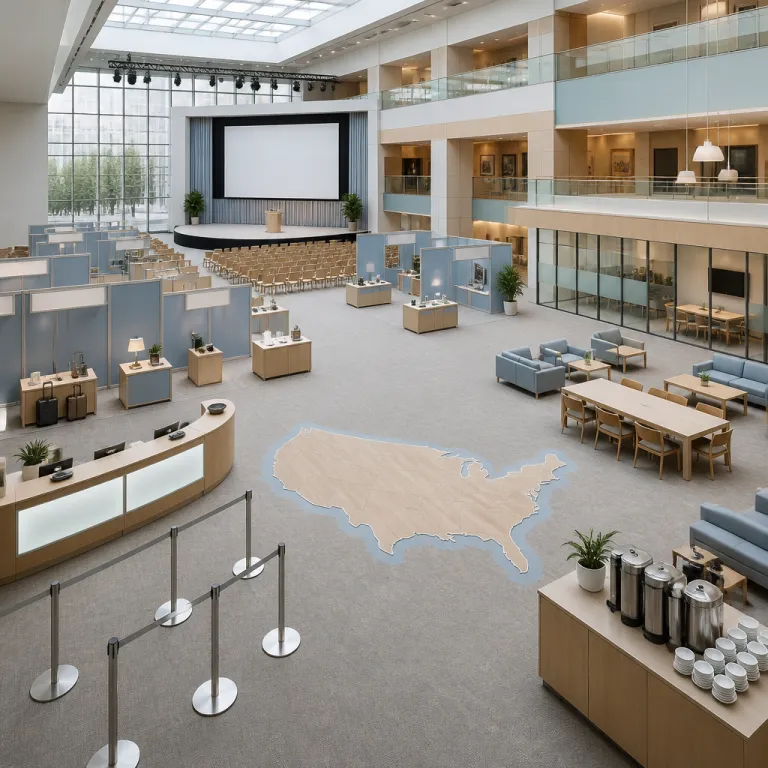
From trade show floor to strategic hub: why top travel conferences in the United States matter
For hospitality leaders, the top travel conferences in the United States have become strategic command centers rather than simple trade fairs. These industry gatherings now align every conference agenda with concrete business travel outcomes, reshaping how hotel groups, destinations, and technology partners design their events. In this context, each person attending a conference in the USA expects measurable value in terms of leads, partnerships, and education.
Across the travel industry, the shift from transactional events to relationship driven conferences is unmistakable. Organizers now blend in person formats with virtual components to extend participation, while digital platforms capture data on sessions, meetings, and tourism product interest. This hybrid view of events allows travel managers and corporate travel buyers to benchmark travel programs, negotiate better terms, and refine their travel insurance and duty of care strategies.
For international brands entering the USA market, the leading international conference platforms are often the fastest route to visibility. These events attract decision makers from business travel, leisure tourism, and meetings and incentives, giving exhibitors a rare chance to influence both travel advisors and travel America focused tour operators. When you evaluate conferences across the United States, prioritize those that integrate technology, evidence based insights, and practical innovation into their content, because these are the gatherings where future ready hospitality models are being shaped.
IPW and inbound tourism power: how international conferences reshape destination pipelines
Among the top travel conferences 2026 United States agenda, IPW stands out as the flagship inbound travel marketplace. Organized by the U.S. Travel Association, this international conference brings together thousands of tourism buyers, media, and suppliers in one concentrated event. For hotel groups, destination management companies, and attractions, IPW is less a conference and more a high velocity business travel engine.
Recent data from the U.S. Travel Association indicates that IPW typically welcomes several thousand attendees from close to 60 international markets, which gives a unique view of global tourism demand patterns. Such international participation allows destinations from Las Vegas to San Diego and from Los Angeles to San Francisco to position their products in front of qualified buyers who manage large travel programs. For investors and hospitality brands, this scale of events in the USA translates into accelerated contracting cycles and clearer forecasts for travel industry revenue streams.
For organizers of hospitality events, IPW also illustrates how conferences can integrate education, technology, and virtual tools without diluting in person impact. Conference apps, digital matchmaking, and virtual meeting extensions enable each person to maximize meetings while keeping the event experience human and relationship focused. When you benchmark major U.S. travel trade shows, use IPW as a reference for how an event can align tourism promotion, business travel objectives, and international conference visibility in a single, tightly curated format.
What is IPW 2026? IPW 2026 is a major inbound travel trade show organized by the U.S. Travel Association.
When and where is the ASTA Travel Advisor Conference 2026? As of the latest public information, ASTA has announced Chula Vista, California, as a host destination in late May 2026, but dates and venue details should always be verified directly with ASTA before finalizing plans.
What is the focus of Business Travel Show America 2026? It focuses on corporate travel management and industry networking.
For hospitality leaders tracking structural shifts in leadership and capital allocation, it is worth pairing these market facing conferences with high level analyses such as this hospitality female leadership wave briefing. This type of perspective helps align event participation with broader governance, diversity, and investment narratives that increasingly influence destination and hotel brand choices. By connecting the dots between international conferences and boardroom level trends, organizers can position their events as essential forums for long term strategy rather than isolated marketing moments.
ASTA and the power of travel advisors: curating experiences, not just room nights
Within the landscape of top travel conferences 2026 United States, the ASTA Travel Advisor Conference plays a distinct role. While many conferences focus on corporate travel or technology, this event centers on travel advisors who curate complex itineraries across the USA and beyond. For hoteliers and tourism boards, these professionals remain critical intermediaries between product and person, especially for high value leisure and group segments.
At ASTA, education sessions dive into topics such as travel insurance best practices, evolving travel programs, and the integration of digital tools that support both virtual and in person client interactions. Exhibitors from Las Vegas, San Diego, Los Angeles, and San Francisco use the conference to present new experiences, from technology enhanced attractions to science themed museum products. This mix of destinations and solution providers turns the event into a living laboratory for how the travel industry can personalize offers while maintaining operational efficiency.
For organizers and investors, the key insight is that travel conferences targeting advisors require a different event design than national gatherings for corporate buyers. Networking formats must allow for deep product storytelling, while technology demonstrations should show how tools support the human relationship between advisor and traveler. When planning your own conference in the USA, study how ASTA balances plenary education, focused summits, and informal events to keep participation high and to convert interest into concrete business travel and tourism bookings.
Corporate strategists preparing for capital markets or ownership discussions can complement this advisor centric perspective with analytical previews such as the NYU IHIF capital stack questions guide. Aligning conference participation with these financial and governance debates ensures that event budgets support both short term sales and long term asset positioning. In practice, this means choosing international conferences where the audience mix, session design, and technology infrastructure all reinforce your broader investment thesis.
Business Travel Show America and GBTA: where corporate travel programs are rewritten
For corporate buyers, travel managers, and technology partners, the top travel conferences 2026 United States calendar is anchored by Business Travel Show America and the GBTA Convention. Business Travel Show America, organized by Northstar Travel Group, focuses on corporate travel management, policy, and technology. In parallel, the GBTA Convention remains the reference point for global business travel strategy, supplier negotiations, and program benchmarking.
These large scale business travel events bring together travel managers, procurement leaders, airlines, hotel groups, and technology providers under one roof. Education tracks cover topics such as digital booking tools, automation for expense management, and science based approaches to traveler well being and sustainability. For hospitality exhibitors, participation in such an international conference is less about brand visibility and more about influencing how corporate travel programs are structured for the next cycle.
Event organizers designing their own conferences in the USA can learn from how Business Travel Show America and GBTA blend virtual and in person formats. Pre event digital content, virtual product demos, and post event webinars extend the life of the conference, while the on site summit sessions focus on high value debates and peer to peer exchanges. When planning your own event in September or event in November, consider how this hybrid architecture can support continuous engagement with business travel stakeholders and keep your travel industry brand top of mind.
For C suite leaders, aligning conference participation with capital and governance discussions is increasingly critical. Resources such as the previously mentioned NYU IHIF capital stack analysis show how conference agendas can be used to test investment hypotheses and stress test development pipelines. By treating each major U.S. travel convention as both a sales platform and a strategic listening post, hospitality executives can refine their view of corporate travel demand, technology adoption, and risk management, including travel insurance and duty of care frameworks.
Designing hospitality events that match the standard of top U.S. travel conferences
For organizers of hospitality events, the benchmark set by top travel conferences 2026 United States is demanding but achievable. The most successful conferences in the USA share three traits: sharp audience definition, rigorous content curation, and seamless technology integration. Whether you target tourism boards, travel advisors, or corporate travel managers, your event must feel indispensable to each person in the room.
Start with content architecture that mirrors the best international conferences, combining plenary sessions, focused summit tracks, and curated networking. For example, a hospitality summit could dedicate one track to digital transformation and operational technology, another to science based sustainability metrics, and a third to business travel and corporate travel program optimization. This structure allows exhibitors from Las Vegas, San Diego, Los Angeles, and San Francisco to align their messaging with the right audience segments and to maximize participation in targeted events.
Technology should enhance, not overshadow, the human experience at your conference in the USA. Use digital platforms for matchmaking, schedule management, and virtual extensions, but keep the core of the event centered on meaningful conversations and product experiences. When planning your own event in September or event in November, study how leading travel conferences manage traffic flows, session timing, and exhibitor visibility to ensure that every person, from investor to travel advisor, leaves with a clear view of next steps and a strong intention to do business.
Hospitality professionals seeking to elevate the experiential dimension of their events can draw inspiration from cultural approaches such as the Japanese art of service, as explored in this omotenashi focused analysis. Integrating such philosophies into conference design helps differentiate your events in the crowded travel industry calendar. It also reinforces the perception that your gatherings across the United States are not only commercial platforms but also laboratories for new standards in guest experience and service excellence.
Leveraging U.S. travel conferences for international expansion and investment decisions
For investors and hotel owners, the top travel conferences 2026 United States are not just marketing opportunities; they are due diligence tools. By attending multiple events across the country, from IPW to Business Travel Show America and the GBTA Convention, you gain a multi angle view of demand, pricing power, and pipeline risks. Each gathering offers different signals about tourism flows, business travel recovery, and the appetite for new concepts in Las Vegas, San Diego, Los Angeles, San Francisco, and secondary markets.
International brands considering expansion into the USA can use these travel conferences to test product market fit before committing capital. Meetings with travel advisors, travel managers, and corporate buyers reveal how your brand is perceived, what travel insurance and duty of care expectations exist, and which travel programs are open to new suppliers. This combination of qualitative feedback and quantitative data from conference apps and digital platforms provides a science informed basis for investment decisions.
For technology partners, participation in these international conferences is equally strategic. Showcasing advanced solutions for revenue management, guest experience, or virtual and hybrid events allows you to position your products at the heart of the travel industry transformation. When you evaluate which conference in the USA to prioritize, focus on those where education tracks, summit formats, and networking events are explicitly designed to connect technology providers with decision makers responsible for large travel programs and hospitality portfolios.
Building a year round strategy around U.S. travel conferences and hospitality events
To fully benefit from the top travel conferences 2026 United States, hospitality brands need a year round engagement plan. Treat each conference in the USA as a milestone in a broader relationship strategy rather than a standalone event. This mindset encourages continuous contact with travel advisors, travel managers, and tourism boards through digital channels, virtual briefings, and targeted events between major conferences.
Start by mapping the key events nationwide that matter for your segments: IPW for inbound tourism, ASTA for advisor networks, Business Travel Show America and the GBTA Convention for corporate travel, and specialized summits for technology or sustainability. For each event, define clear objectives related to business travel contracts, international conference speaking opportunities, or partnerships in markets such as Las Vegas, San Diego, Los Angeles, and San Francisco. Use conference apps and digital CRM tools to track every person you meet, the topics discussed, and the follow up actions required.
Finally, integrate insights from these travel conferences into your internal education and product development cycles. Share learnings on travel insurance trends, technology adoption, and science based sustainability metrics with your sales, operations, and development équipes. Over time, this disciplined approach turns participation in international conferences and hospitality events into a competitive advantage, ensuring that your travel industry brand remains visible, relevant, and trusted across the USA and beyond.
Key figures shaping top U.S. travel conferences and hospitality events
- IPW typically welcomes several thousand attendees, which makes it one of the largest inbound travel trade events in the USA and a critical marketplace for destinations and hospitality brands targeting international visitors (source: U.S. Travel Association public event information).
- Close to 60 international markets are usually represented at IPW, underlining its role as a truly international conference and a unique platform for tourism boards and hotel groups seeking to diversify source markets beyond traditional travel America flows (source: U.S. Travel Association summaries of recent editions).
- Major corporate travel gatherings such as the GBTA Convention and Business Travel Show America bring together thousands of travel managers and procurement leaders, creating dense networks where even a single person’s decision can shift millions of euros in annual business travel spend (sources: GBTA and Northstar Travel Group public event information).
- Hybrid formats that combine in person and virtual participation have become standard across leading events in the United States, with many organizers reporting that digital extensions can increase total audience reach by 20 to 40 percent compared with purely physical events (sources: industry reports from the U.S. Travel Association and major event technology providers).
FAQ about top travel conferences in the United States for hospitality professionals
What makes IPW so important for the hospitality and tourism industry ?
IPW functions as a high intensity marketplace where destinations, hotels, attractions, and transportation providers meet international buyers and media. With several thousand attendees from dozens of countries, it compresses years of sales travel into a few days. For hospitality brands, this means faster contracting, better visibility, and direct access to decision makers shaping global tourism flows.
How should hotel groups prioritize between ASTA, GBTA, and Business Travel Show America ?
ASTA is ideal if your strategy relies heavily on travel advisors and complex leisure or group itineraries. GBTA and Business Travel Show America are better suited for brands targeting corporate travel programs, meetings, and events, because they gather travel managers, procurement leaders, and technology partners. Many hotel groups attend all three but tailor their messaging and product focus to each audience.
Are virtual and hybrid formats still relevant for top U.S. travel conferences ?
Virtual and hybrid formats remain essential because they extend reach and support year round engagement. Leading conferences in the USA use digital platforms for pre event education, virtual matchmaking, and post event follow up, while keeping the core experience in person. For organizers, this approach improves data collection, supports international participation, and enhances ROI for exhibitors and sponsors.
How can hospitality investors use travel conferences to inform capital decisions ?
Investors can use events across the United States as real time barometers of demand, pricing, and product trends. Meetings with travel managers, advisors, and tourism boards reveal which destinations, segments, and concepts are gaining traction, while education sessions provide insight into technology, sustainability, and risk management. Combined, these signals help refine assumptions in financial models and guide where and when to deploy capital.
What practical steps should exhibitors take to maximize conference participation ?
Exhibitors should book accommodations early, review event schedules in detail, and pre schedule as many meetings as possible using conference apps. On site, focus on concise storytelling that links your product to concrete outcomes for business travel, tourism, or events, and capture every person’s details in a CRM for structured follow up. After the conference, use digital channels and virtual briefings to maintain momentum and convert leads into long term partnerships.