Event content repurposing for hospitality: how hotel brands turn conferences into 90 days of demand
Most hospitality events still treat content as a production expense, not a reusable revenue asset. Event organizers and hotel commercial teams approve filming as a line item, then watch the event footage disappear once the badges are packed. The result is a familiar pattern where systematic repurposing of conference content never happens at scale and audience reach flatlines after the last corridor conversation.
Budgets are usually burned by day two on booth builds, receptions and last minute social posts. The same teams that fight for every euro of ROI rarely assign an owner for content repurposing or a calendar to turn recordings into social media, blog articles and sales enablement assets. What should be a 90 day repurposing programme becomes a single recap post and a forgotten shared drive of long form video files.
Industry benchmarks from video platforms and B2B marketing studies consistently show that on demand event video extends lead generation by several weeks or even months. For example, a 2023 internal analysis by a European hotel group found that contacts who watched on demand conference recordings generated 38% more qualified opportunities over 90 days than those who only attended live sessions, measured via CRM campaign attribution and tracked content URLs. Many practitioners also report material uplifts in lead volume when repurposed event content is structured into a clear content strategy instead of left as raw recordings. Yet many hotel groups still brief agencies to create one highlight reel and a few social snippets, then wonder why their marketing funnel runs dry before the next trade show cycle.
There is also a governance gap between event organizers, marketing teams and content creators. Each group assumes another will transform event footage into repurposed content, case studies or blog post series that nurture demand. Without a defined workflow, KPIs and a single accountable owner, repurposing strategies stay theoretical while sales teams lose the chance to use real life conference content in their outreach.
Minimum viable capture: what to film so you can repurpose later
To make event content repurposing work, you need a capture plan before you sign the stand contract. A minimum viable capture approach defines which sessions, interviews and real life demos will be filmed, how audio will be handled and which formats are needed for later repurposing. This is where a Revenue Director should sit with marketing and event organizers to align capture with pipeline goals, not just with stage glamour.
At a hospitality technology conference such as HITEC, start with three capture tiers. Tier one is conference content from keynotes and panels where your brand appears, recorded in long form video with clean audio so you can repurpose content into clips, transcripts and blog posts. Tier two is semi structured conversations at the booth or in a quiet lounge, where you record five to ten minute interviews with clients, technology partners and your own leaders about concrete use cases and ways to repurpose event learnings.
Tier three is fast social media capture for LinkedIn and other channels. Here you film short vertical video segments, photograph product demos and collect quotes that can become media posts and social posts during and after the event. A simple rule helps your team on site: every meaningful conversation that could support a future case study, blog post or sales deck deserves at least one recorded asset.
One page capture checklist for hotel events
Use this copy and paste list as your minimum viable capture template:
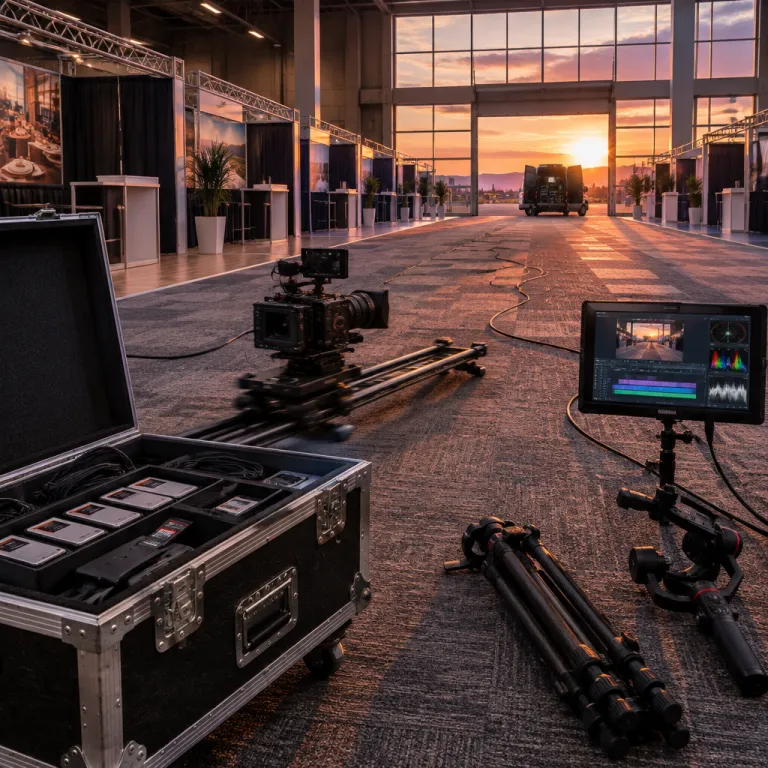
Camera and video: 1 x main camera (4K or 1080p), spare batteries, tripod, wide and medium lenses, smartphone backup with stabiliser, SD cards labelled by day and tier, recording format set to MP4 or MOV for easy editing.
Audio: 2 x wireless lapel mics for speakers, 1 x handheld mic for booth interviews, 1 x shotgun mic for panel capture, audio recorder with XLR inputs, headphones for monitoring, backup cables and spare batteries.
Lighting and setup: 2 x LED panels with stands, softboxes or diffusers, gaffer tape, extension leads, power strips, simple backdrop or branded wall for interviews, quiet corner identified in advance.
File management: daily folder structure by date and tier, naming convention (event_session_speaker_tier), backup to external SSD and cloud each evening, shared folder for editors with readme file explaining tiers and priorities.
From footage to 90 days of demand: a structured repurposing strategy
Once the event ends, the real work of event content repurposing begins. You move from raw files to a structured content strategy that stretches demand generation for at least 90 days, using repurposing tactics that respect both sales cycles and audience fatigue. Without this discipline, even the best conference content will sit in a shared folder while your sales team complains about cold leads.
Start with a 30 / 60 / 90 day calendar that maps each asset to a channel, owner and call to action. In the first 30 days, focus on fast turnaround social media clips, a flagship blog post recap and a series of LinkedIn posts that highlight key insights from the repurposing event experience. Each post should link to a clear next step, whether that is a demo request, a download of repurposed content such as a playbook or a sign up for an on demand video library.
Days 30 to 60 are about deepening engagement with long form assets. Here you repurpose event recordings into thematic blog posts, sales one pagers and email nurture sequences that segment the audience by role, such as Revenue Directors, asset managers or technology partners. This is also the right time to create case studies from real life conversations captured at the booth, turning existing content into proof points that a CFO will respect.
Sample 30 / 60 / 90 day calendar with CTAs and UTMs
Days 0–30: flagship recap article (CTA: “Book a revenue strategy demo”), three short LinkedIn clips (CTA: “Watch the full session on demand”), email to event attendees (CTA: “Access the gated video library”). Use UTM tags such as ?utm_source=linkedin&utm_medium=social&utm_campaign=hitec_recaps and ?utm_source=email&utm_medium=nurture&utm_campaign=post_event_series on every link.
Days 31–60: weekly deep dive blog posts by theme (CTA: “Download the conference playbook PDF”), role based nurture emails (CTA: “Schedule a pricing workshop”), internal sales one pager (CTA: “Share this case study in your next outreach”). Tag links with utm_campaign=hitec_deepdives and segment by role in your CRM.
Days 61–90: account based playlists for top prospects (CTA: “Confirm a QBR at IHIF”), personalised follow up emails from account managers (CTA: “Reply to request a tailored forecast”), investor update note linking to a curated clip reel (CTA: “Discuss expansion scenarios”). Use UTMs such as ?utm_source=crm&utm_medium=abm&utm_campaign=top_50_accounts so you can compare performance against generic campaigns.
AI post production: where automation stops and editors take over
AI driven tools have changed the economics of event content repurposing for hospitality brands. What once required a full agency retainer can now start with automated transcripts, highlight detection and topic indexing that make repurposing content faster and more precise. Used well, these tools turn long form conference content into a searchable library that your commercial teams can mine for months.
Modern platforms ingest video, generate accurate transcripts and suggest short clips optimised for social media within minutes. They can tag segments by speaker, topic and even sentiment, which makes it easier to repurpose content into themed blog posts, email snippets and media posts without watching every second. This is particularly powerful for events where your brand appears in multiple panels or fireside chats and you need to repurpose event footage across different verticals.
However, AI is not a substitute for editorial judgment in a high stakes B2B hospitality context. Human editors still need to decide which key messages support your positioning, which quotes align with your pricing or distribution strategy and how to create narrative arcs that resonate with an executive audience. They also protect you from publishing repurposed content that misrepresents partners or reveals sensitive data from closed door sessions.
The most effective repurposing strategies combine AI speed with human curation. Let the machine handle first pass clipping, transcription and basic subtitles, then have an experienced editor craft final social posts, blog post outlines and sales videos that reflect your brand voice. This hybrid model respects the insight that “What is event content repurposing?” and “Why repurpose event content?” and “How to repurpose event content?” are not just technical questions but strategic ones about how you maintain audience loyalty between major events.
A worked 90 day calendar: hotel group playbook after HITEC or IHIF
To see event content repurposing in real life, take a hotel group attending HITEC or IHIF with a clear commercial agenda. The team wants to reach asset owners, technology partners and corporate buyers, and it has invested heavily in a stand, private meetings and a sponsored session. Without a repurposing content plan, that spend will rely almost entirely on in person badge scans and a few follow up emails.
Day 0 to 7: publish a flagship blog post summarising your conference content angle, supported by three to five short video clips on social media that highlight key soundbites from your leadership. Sales teams receive a toolkit of pre written posts and repurposed content links so they can follow up with their own accounts using consistent messaging. During this phase, you also create a gated on demand video page that hosts your session recording and a curated playlist of repurposed event clips.
Day 8 to 30: roll out a weekly series of blog posts that go deeper into specific themes such as revenue management innovation, gaming in hospitality or new partnership models. One of these can link to a deeper analysis of how gaming and hospitality sector tags redefine professional events and experiences, tying your event content to broader industry shifts. Parallel email nurture tracks send targeted media posts and case studies to different audience segments, using existing content from the event to address their particular pain points.
Simple CRM attribution workflow for repurposed content
First, create a dedicated campaign in your CRM for the event and add child campaigns for live attendance, on demand video, blog recaps and account based playlists. Second, ensure every repurposed asset uses consistent UTM parameters and that your marketing automation platform passes these into the CRM as campaign responses. Third, define rules for primary versus influenced attribution so you can distinguish revenue sourced by repurposed content from deals that only touched the live event. Finally, run cohort reports comparing contacts who engaged with on demand assets against those who did not, tracking metrics such as opportunity creation rate, average deal size and time to close to refine your content repurpose model for the next repurposing event cycle.
FAQ
What is event content repurposing for hospitality events ?
Event content repurposing in hospitality means taking materials from conferences, trade shows and professional events and adapting them into new formats for ongoing use. You might convert a panel recording into short video clips, blog posts and social posts that extend your marketing reach. The goal is to maximise ROI by turning one repurpose event into a steady flow of repurposed content that supports sales and brand authority.
Why should hotel commercial teams repurpose event content ?
Hotel commercial teams should repurpose content because on demand assets extend lead generation well beyond the physical event. Repurposed event content also supports sales enablement, giving account managers real life examples, case studies and conference content to use in follow up conversations. This approach improves both demand generation and audience retention between major events.
Which event assets are easiest to repurpose into new formats ?
The easiest assets for content repurpose work are recorded sessions, booth interviews and product demos. Long form video can be cut into short clips for social media, transcribed into blog posts and turned into media posts for email campaigns. Slide decks and one pagers from events also adapt well into blog post series, infographics and sales collateral.
How can I measure the impact of repurposed content on event ROI ?
To measure impact, tag all repurposed content with tracking links and connect them to your CRM and marketing automation systems. Compare lead volume, qualification rates and revenue from contacts who engaged with repurposed content against those who only attended the live event. This helps you attribute uplift honestly and separate the effect of repurposing strategies from general brand recall.
Do smaller hospitality brands have enough resources for content repurposing ?
Smaller brands can still run effective repurposing content programmes by focusing on minimum viable capture and smart use of AI tools. A single well recorded session and a handful of interviews can generate weeks of social posts, blog posts and email content when processed through AI transcription and clipping platforms. The key is to plan capture in advance and assign clear ownership for post event workflows, even if the team is small.