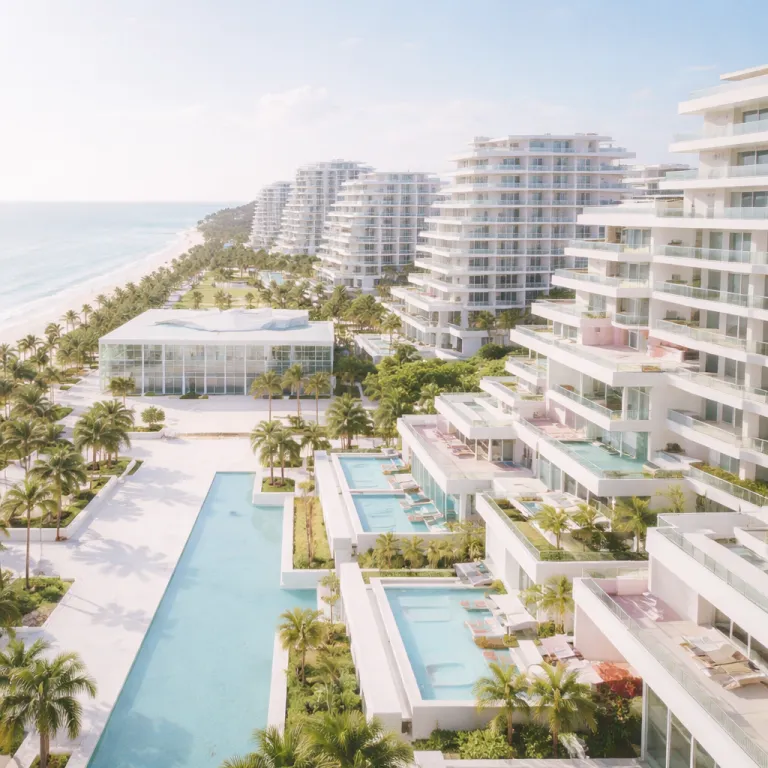
From side panel to main stage: branded residences investment as a structural signal
Branded residences investment moved from niche topic to core agenda when IHIF EMEA created a dedicated BxR track. That programming shift reflects how institutional capital now treats branded residences, branded homes and wider branded residential platforms as a structural asset class rather than a marketing add on. For hotel groups and event organisers, that means every serious hospitality investment conference now needs a clear narrative on branded residence strategy, not just a passing reference to residential properties.
Institutional investors like the way these residences align luxury living with predictable fee streams and lower operating risk than a full service hotel. They see a global market where luxury residential demand, constrained supply and strong hotel brands combine to generate recurring property management fees, price premiums over comparable luxury homes and long term brand loyalty. For organisers of investment forums, that translates into higher expectations for data driven sessions on real estate structures, price formation and branded residences investment performance across different projects and markets.
For C suite leaders, the signal is sharper still because branded residences now influence portfolio architecture, not just one off developments. When luxury brands such as Marriott International, Hilton Worldwide, InterContinental Hotels Group and Hyatt Hotels Corporation bring branded living into their core growth plans, they reshape how capital is allocated between hotel assets and residential estate. Event agendas that treat branded residence deals as side stories risk missing the strategic debate about how hospitality branded platforms will balance hotel supply, residential projects and ultra luxury branded homes over the next cycle.
Why institutional capital is leaning into branded residences investment
Institutional capital likes branded residences investment because the revenue stack is diversified and relatively resilient. Investors gain exposure to luxury real estate through branded residences and residences branded portfolios that combine sales proceeds, ongoing property management fees and inflation linked service charges, without carrying the full volatility of hotel operating income. For many funds, that mix of high end residential properties and hospitality branded services feels closer to infrastructure style cash flow than to traditional hotel trading risk.
Data from specialist advisors shows that branded residences can command average price premiums of around one third over comparable non branded luxury residential stock. That uplift is driven by the strength of the brand, the perceived quality of lifestyle services and the confidence buyers place in established hotel brands with global reach. When those price premiums are capitalised across large projects, the incremental value becomes material for both developers and long term investors who are underwriting luxury living demand in gateway and resort markets.
Institutional investors also appreciate the alignment between brand, buyers and operations in a well structured branded residence. Owners pay for a luxury lifestyle that blends private living with hotel level amenities, while the brand earns recurring fees for managing the residential estate and associated hospitality services. For event planners curating investor panels, the most engaged conversations now focus on how different brands structure their branded living contracts, how developers share risk and how global capital views the balance between hotel assets and branded homes in mixed use projects.
The operational reality: when hotel brands become residential stewards
Running a branded residence is not the same as running a hotel, even when the logo on the façade is identical. The operational model for branded residences investment involves homeowner associations, long term owner relations, complex liability structures and a different rhythm of service delivery than transient hotel guests. For hotel brands, that means the operations équipe must master residential property management, not just traditional hospitality service standards.
In practice, branded residential projects require clear governance between developers, brand and owners about what is included in base fees, what counts as optional services and how price adjustments are handled over time. Misalignment here can erode the perceived value of luxury living, especially in ultra luxury residences where buyers expect flawless lifestyle curation and transparent real estate cost structures. For C suite leaders, the key question is whether their brand systems, CRM tools and on property teams can sustain hospitality branded excellence across decades of residential ownership cycles.
Iconic examples such as Ritz Carlton branded residences illustrate both the upside and the operational demands of this model. These branded homes and luxury homes show how a strong brand can anchor high price points and deep buyer fidélité, but only when property management, hotel services and residential expectations are tightly synchronised. Event sessions that unpack real case studies, rather than glossy marketing, give investors and hotel executives the operational insights they need to judge whether their own branded residence ambitions are realistic.
Brand architecture, dilution risk and geographic hot spots
As branded residences investment scales, brand architecture becomes a board level issue rather than a design detail. When luxury brands see their branded residence segment outperforming core hotel portfolios, the risk of brand dilution or internal cannibalisation rises sharply. A luxury residential tower that trades at record prices while nearby hotels underperform can unsettle owners, confuse buyers and challenge the brand promise if positioning is not crystal clear.
Geographically, the market is fragmenting between gateway European capitals, Mediterranean resort destinations and emerging secondary cities where land values still support new projects. Global investors are mapping where luxury real estate demand, limited supply and strong hotel brands intersect to justify new branded residential developments and branded living communities. For event organisers, that means curating panels that compare gateway markets with secondary locations, rather than treating all residential properties as a single homogeneous asset class.
Brand leaders must also decide how far down the price spectrum they are willing to stretch their hospitality branded offerings. Ultra luxury branded homes and residences branded under flagship marques can coexist with more accessible branded residential products, but only if segmentation, service levels and lifestyle narratives remain disciplined. Conferences that put development directors from Marriott International, Hilton Worldwide, InterContinental Hotels Group and Hyatt Hotels Corporation on the same stage can surface how each brand balances growth, exclusivity and long term real estate credibility.
A practical checklist for hotel group VPs entering branded residences
For a hotel group VP evaluating a first branded residences investment partnership, the starting point is contract duration and exit flexibility. Long term agreements can lock in attractive fee streams from branded residences and branded homes, but they also hard wire the brand into the residential estate for decades, so termination and rebranding clauses must be negotiated with care. Investors and developers will push for stability, while the brand needs protection against underperforming projects or shifts in market positioning.
Revenue sharing mechanics sit next on the checklist, covering upfront development fees, ongoing property management income and any participation in real estate sales price premiums. Clear KPI frameworks around service quality, owner satisfaction and lifestyle delivery help align incentives between hotel brands, developers and buyers across the life of the branded residence. Governance structures should also define how capital expenditure is approved, how supply of new services is managed and how disputes between residential owners and hotel operators are resolved.
Brand standard enforcement is the final non negotiable, because every branded residential failure damages the wider portfolio. The contract must specify inspection rights, remediation timelines and the consequences if developers or owners resist required upgrades that protect luxury living standards. For executives benchmarking best practice, case studies shared at specialist conferences and in depth analyses of venues such as 25 East Washington in Chicago, which is reshaping professional hospitality events in the heart of the Loop, offer useful parallels on how mixed use assets can sustain both operational excellence and investor grade governance over time.
FAQ
What are branded residences in the context of hotel groups ?
Branded residences are luxury homes that carry a recognised hotel or lifestyle brand and offer hotel like services under long term management agreements. They combine residential ownership with access to amenities such as concierge, wellness facilities and food and beverage outlets operated by the brand. For hotel groups, they extend the real estate footprint beyond traditional hotels while generating recurring fees and reinforcing brand loyalty.
Why are investors allocating more capital to branded residences investment ?
Investors are increasing allocations because branded residences can deliver higher sales values than comparable non branded luxury properties and generate ongoing management and service fees. The operating risk profile is often lower than a hotel, as income is less dependent on daily occupancy and more on long term owner relationships and service contracts. This combination of capital appreciation potential and relatively stable cash flow appeals to institutional capital seeking diversification within hospitality real estate.
Which hotel brands are most active in branded residential projects ?
Several major hotel brands are active, including Marriott International, Hilton Worldwide, InterContinental Hotels Group and Hyatt Hotels Corporation, each managing or developing branded residential projects in key global markets. These brands leverage their existing hotel operations, loyalty programmes and design standards to support residential offerings. Their involvement gives buyers confidence in service quality and gives investors comfort around governance and operational expertise.
What should buyers evaluate before purchasing a branded residence ?
Prospective buyers should research the brand's reputation, understand the services offered and evaluate the location's value. They also need to review the homeowners association rules, service charge structure and property management standards to ensure the lifestyle promise matches the long term financial commitments. Legal advice on the management agreement and resale conditions is essential, especially in ultra luxury developments with complex governance.
How fast is the branded residences market growing globally ?
The global branded residences market has expanded significantly, with hundreds of projects now operating across multiple regions. Sector research indicates double digit annual growth in the number of schemes, driven by demand from high net worth buyers seeking luxury living with professional management. This growth has encouraged more hotel brands and developers to explore new projects, including in emerging markets where luxury residential supply remains limited.