Mega-event pressure is reshaping hospitality conference agendas
Hospitality leaders are no longer asking whether the FIFA World Cup will move the market. They are asking which conference, which venue and which stage will give them the sharpest playbook for hospitality options that actually convert. For organisers of salons and trade shows, that shift in mindset is already rewriting how agendas are built and how exhibitors frame every match day conversation.
The tournament stretches across three countries and multiple location clusters, which means the host nation is not a single city but a continental network of venues, airports and urban districts. That scale forces hospitality conferences to move beyond generic mega-event panels and into granular sessions on multi venue coordination, cross border staffing and the choreography of guest access between hotel, lounge and stadium. The Hospitality Show has already signalled this pivot by adding dedicated World Cup partnership programming to its November agenda, a clear response to attendees who want operational intelligence rather than marketing slogans.
For trade show strategists, the new baseline is simple and unforgiving. Any session that mentions the world cup without mapping specific revenue scenarios for group stage matches, knock out rounds and non host city spillover will feel like noise. The conferences that win will be those where a VP of revenue can walk from a panel on surge pricing for match days straight into a closed door roundtable on options pitchside for VIP clients and then into a corridor meet and greets with a technology partner who can actually integrate those models into the PMS and CRM stack.
From generic sports talk to match-level revenue scenarios
Past mega-events taught this industry that high level enthusiasm does not pay the debt on a renovated lounge or a new pitchside lounge build. The Olympics and the Super Bowl created spikes in hospitality sales, but only the operators who had modelled game by game demand curves and channel mix captured sustainable ROI. This time, conference content is finally catching up with that reality.
Panels that simply celebrate the fifa world spectacle are being replaced by workshops that simulate specific match days, including early group stage matches with uncertain demand and late stage matches where every room, suite and lounge vip seat is already purchased online. In these sessions, speakers are walking through how official hospitality inventory interacts with transient demand, how to price club FIFA style experiences versus more accessible champions club formats and how to protect brand equity when the host nation exits early. The conversation is no longer about whether the cup will be big ; it is about which hospitality options will still make sense when the last whistle blows.
On Location, appointed as the official hospitality provider, has already allocated more than 500 000 packages, and that single data point is driving a new level of urgency in conference rooms. When hospitality revenue linked to the tournament is projected to more than double previous benchmarks, no serious hotel group can afford to skip the sessions that unpack how those packages interact with local inventory. The best events are now structuring a series of case based discussions where operators from different world locations compare how they will follow team fan flows, manage pavilion buy decisions and negotiate access rules with stadium partners.
Why non host cities suddenly care about match schedules
One of the most under estimated shifts in the conference calendar is the attention from non host destinations. Hotel executives from secondary cities, mountain resorts and even wellness retreats far from any match venue are filling rooms at World Cup themed sessions. They understand that the world does not travel only to the host nation cities ; it also disperses along corporate travel routes, incentive trips and extended leisure stays before and after key matches.
For these operators, the agenda sweet spot is where mega-event content intersects with broader experiential hospitality strategy. Sessions that analyse how wellness retreats in emerging destinations are redefining experiential hospitality for professional events, such as those highlighted in this analysis of wellness retreats in Azerbaijan, are suddenly relevant to executives planning football themed corporate retreats. They want to know how to host a series of executive meetings that align with key matches, how to design a lounge that streams the game without turning into a noisy sports bar and how to structure meet and greets that feel like board level networking rather than fan chaos.
Conference organisers who recognise this are building tracks that speak directly to non stadium venues. These sessions explore how to package a world cup viewing experience in a mountain resort pavilion, how to use options pitchside style design cues in a rooftop lounge and how to structure sales narratives that help corporate clients register interest early. The message is clear for hospitality professionals across the world : if you wait until the first match kicks off to plan, you will be buying strategy at panic prices.
VIP and executive experiences are becoming the new conference currency
For senior hotel executives, the real action around FIFA World Cup 2026 hospitality events will not happen only in the stadium suites. It will unfold in the VIP and executive experiences that conferences prototype, stress test and then sell on to corporate clients. The salons that understand this are quietly turning their own events into live laboratories for high yield hospitality.
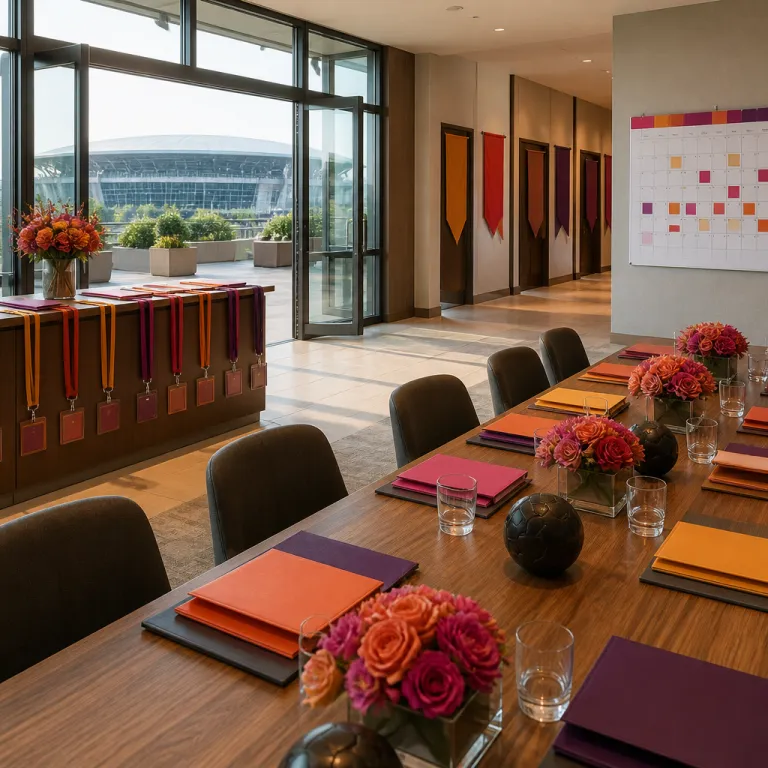
Instead of talking abstractly about premium hospitality, leading conferences are building full scale lounge vip environments on the show floor. These spaces mirror a champions club or club FIFA concept, complete with controlled access, curated food and beverage and discreet zones for meet and greets between investors, technology partners and hotel brands. Attendees can walk through a mock fifa pavilion, compare different hospitality options side by side and see how a pitchside lounge layout changes guest behaviour compared with a traditional corporate box.
This hands on approach is particularly powerful for C suite delegates who sign off on multi million euro capex for new hospitality venues. They can test how different seating configurations affect networking density, how screen placement changes the balance between game focus and deal making and how a pavilion buy decision might play out when a match goes into extra time. When these executives later negotiate official hospitality packages with On Location or local partners, they will have a much clearer sense of which experiences align with their brand and which are likely to sit empty during early group stage matches.
Executive retreats as test beds for World Cup formats
Corporate retreats are emerging as a critical bridge between conference theory and real world execution. Hotel groups are using executive offsites to pilot formats that can later be scaled for world cup related demand, from board meetings aligned with key matches to incentive trips that follow team journeys across multiple locations. The smartest conference organisers are programming sessions that help planners design these retreats with surgical precision.
Content that once focused on generic leadership offsites now dives into how to structure a three day executive retreat around two stage matches, one in person meet and greets with a former player and a final day of strategic workshops. Resources such as this guide to high impact corporate retreat ideas for VIP and executive hospitality experiences are being cited on panels as practical frameworks. Speakers walk through how to integrate official hospitality access into the agenda, when to schedule private lounge time versus plenary sessions and how to manage the risk that a critical match goes badly for the client’s preferred team.
For exhibitors, this shift opens a new sales narrative. Technology vendors can position their platforms as the connective tissue that links retreat agendas, match schedules and hospitality inventory, while design firms can showcase modular pavilion and lounge concepts that travel from conference centre to resort to stadium. The conferences that facilitate these conversations are not just selling booth space ; they are brokering long term partnerships that will outlast the final whistle.
From badge scans to boardroom level meet and greets
Networking formats are also being rewritten under the pressure of mega-event expectations. Traditional cocktail receptions are giving way to curated lounge vip sessions where a small group of decision makers can watch a game together, step into a quiet side room for negotiations and then return to the shared experience without losing momentum. The value is not in the badge scan but in the shared emotional arc of a tight match.
Conference organisers are experimenting with series based networking formats that mirror a tournament structure. Over several match days, the same cohort of investors, hotel executives and technology partners meet in different hospitality settings, from a relaxed pavilion to a more formal champions club environment and finally a pitchside lounge simulation. This progression allows relationships to deepen organically, with each game providing a new context for conversation and each venue showcasing a different slice of the hospitality portfolio.
For hospitality brands, these formats double as live product demonstrations. A hotel group can host a follow team themed evening where the décor, food and entertainment reflect a specific host nation city, while a technology partner quietly tracks engagement data to refine future offers. When these experiences are later packaged and purchased online as part of official hospitality or corporate travel bundles, both sides already know which elements drive real sales and which are just visual noise.
Exhibitor strategies and the new World Cup readiness narrative
Exhibitors are under pressure to prove that their solutions are genuinely World Cup ready, not just wrapped in football themed graphics. The trade show floor is already seeing a split between vendors who can articulate a clear match level value proposition and those who rely on vague references to the fifa world spectacle. Senior buyers are rewarding the former and quietly walking past the latter.
Technology providers that succeed in this environment frame their products around specific operational challenges linked to FIFA World Cup 2026 hospitality events. Revenue management platforms demonstrate how they will handle sudden spikes in demand for group stage matches, including scenarios where the host nation plays in a smaller venue or where a surprise team advances. Access control vendors show how their systems manage layered permissions across hotel, shuttle, stadium and lounge, while CRM providers highlight how they will segment guests who purchased online official hospitality packages versus those who booked direct.
Design and build firms are also sharpening their narratives. Instead of generic booth models, they are presenting detailed concepts for fifa pavilion structures, modular lounges and temporary hospitality venues that can be deployed in fan zones, rooftop terraces or convention centres. These exhibitors talk fluently about options pitchside versus elevated viewing decks, about how a pavilion buy decision affects staffing ratios and about how to maintain brand consistency across a series of pop up spaces in different world locations.
Floor plans as strategy documents, not just logistics
For organisers, the floor plan has become a strategic tool in its own right. Where a champions club style booth sits relative to a pitchside lounge simulation or an access control demo can shape the conversations that unfold across an entire day. The most sophisticated events treat the exhibition hall like a mini host nation, with zones that mirror real world hospitality ecosystems.
Conference teams are studying how high value hospitality events use spatial design to drive engagement, including venues such as the Nob Hill Masonic Theater where seating charts shape premium experiences. Analyses like this deep dive into how a theater seating chart shapes high value hospitality events are informing how lounges, stages and private meeting rooms are positioned on the show floor. The goal is to create natural flows where a delegate can move from a plenary session on mega-event strategy into a fifa pavilion mock up, then into a quiet lounge for negotiations without ever feeling lost.
For exhibitors, this spatial thinking changes the sales conversation. A technology partner might negotiate for a booth adjacent to a mock pitchside lounge, knowing that executives who have just experienced a high intensity game simulation will be primed to discuss access control, data capture and guest journey mapping. Hospitality brands may cluster together in a world cup themed zone, using shared programming such as meet and greets with former players to draw traffic and then routing qualified leads to specific stands based on interest.
Filtering real solutions from World Cup themed noise
With every vendor eager to attach their brand to the tournament, conference organisers have a responsibility to protect content quality. That means setting clear criteria for which products can be marketed as World Cup relevant and which cannot. Panels that feature only sponsors with superficial football branding risk eroding trust with senior buyers.
Some events are responding by creating curated World Cup readiness showcases, where a small group of vetted exhibitors demonstrate solutions that have already been tested in comparable mega-events such as Formula 1 races or continental championships. These showcases often include live simulations of match days, with systems handling ticket scans, lounge access, food and beverage orders and real time guest feedback. Organisers use these demonstrations to anchor more critical discussions about data privacy, labour conditions and long term asset utilisation once the cup will have ended.
For investors walking the floor, this curation is invaluable. They can quickly identify which hospitality concepts, technology platforms and venue designs are likely to scale beyond the tournament and which are single use bets. In a world where capital is finite and expectations are high, the conferences that help filter signal from noise will become the default stage for serious partnership negotiations.
The risk of World Cup fatigue and how to keep content sharp
There is a real risk that the industry talks itself into World Cup fatigue long before the opening match. When every panel, workshop and sales pitch claims a football angle, the narrative quickly loses precision. Hospitality leaders are already signalling that they will tune out any content that does not translate the spectacle into concrete operational and financial decisions.
To stay relevant, conference programmes need strict editorial discipline. Sessions should be accepted only when they address a clearly defined problem, such as staffing multi venue operations across different time zones, integrating official hospitality data into existing CRM systems or managing guest expectations when a high profile match is relocated to a different location. Vague titles that simply reference the world cup or fifa world excitement without specifying the operational focus will not survive scrutiny from a C suite audience.
One practical safeguard is to design tracks around decision points rather than themes. For example, a series on investment decisions could walk delegates through whether to build a new pavilion, retrofit an existing lounge or partner with a third party fifa pavilion operator, using real capex and forecast data. Another series could focus on commercial strategy, comparing the ROI of selling hospitality options directly versus bundling them with corporate travel packages that are purchased online and promoted through follow team campaigns.
Balancing permanent capabilities with tournament specific plays
Hospitality executives are rightly wary of over investing in assets that make sense only for a single tournament. Conferences that help them distinguish between permanent capabilities and event specific plays will earn long term loyalty. The key is to frame the World Cup as a stress test for systems that should serve the business well beyond any single cup.
For example, a session on access control should not focus solely on stadium match days. It should explore how the same technology stack can manage tiered access to executive lounges, conference pavilions and rooftop venues during regular corporate events. Similarly, discussions about meet and greets should examine how to design scalable formats that work for both football legends and C level speakers, ensuring that staff training, guest flow and data capture processes remain consistent.
Historical precedent supports this approach. After major events such as the Olympics or Formula 1 expansions, the most successful hospitality operators were those who treated the mega-event as a catalyst to upgrade core capabilities, not as a one off spectacle. Conferences that frame FIFA World Cup 2026 hospitality events in this way will help the industry avoid the boom and bust cycle that has plagued previous host markets.
Using data and verified insight to anchor the conversation
One of the strongest antidotes to World Cup fatigue is hard data. When speakers ground their arguments in verified numbers, the conversation shifts from hype to strategy. The hospitality community already has access to concrete figures that can anchor these discussions.
For example, "On Location is the official hospitality provider. (inside.fifa.com)" and "Over 500,000 packages have been allocated. (investor.tkogrp.com)" and "Significant growth in hospitality partnerships and revenue. (investor.tkogrp.com)". When such statistics are presented alongside case studies from previous mega-events, they allow decision makers to benchmark their own plans realistically.
For conference organisers, the implication is clear. Curate speakers who can bring real data from their own venues, whether that is a city centre hotel that has already hosted a major fan zone, a resort that has tested follow team packages or a technology partner that has processed millions of match day transactions. When the conversation is anchored in measurable outcomes, FIFA World Cup 2026 hospitality events stop being a marketing slogan and become a rigorous framework for rethinking how this industry designs, sells and delivers high value experiences.
Key figures reshaping hospitality event strategies
- More than 500 000 hospitality packages have already been allocated for the tournament, signalling unprecedented demand for premium experiences and forcing conferences to prioritise sessions on inventory management and pricing strategies (source : On Location investor communications).
- Hospitality revenue linked to the event is projected to increase by around 100 percent compared with previous cycles, pushing hotel groups and investors to use trade shows as primary forums for partnership negotiations and capital allocation decisions (source : On Location investor communications).
- The competition will run for more than one month across three countries and multiple venues, creating a complex calendar of match days that conferences now use as templates for scenario planning workshops on staffing, security and guest journey design (source : FIFA event overview).
- The expansion to 48 teams and an extended group stage means a larger number of stage matches, which in turn multiplies the number of potential hospitality products, from early round lounge access to late round pitchside lounge experiences (source : FIFA competition format announcements).
- Record breaking hospitality sales already reported by the official provider are encouraging organisers of salons and expos to dedicate entire tracks to mega-event readiness, with some events reporting that World Cup themed sessions account for a significant share of their programme submissions (source : industry conference announcements and hospitality sales reports).