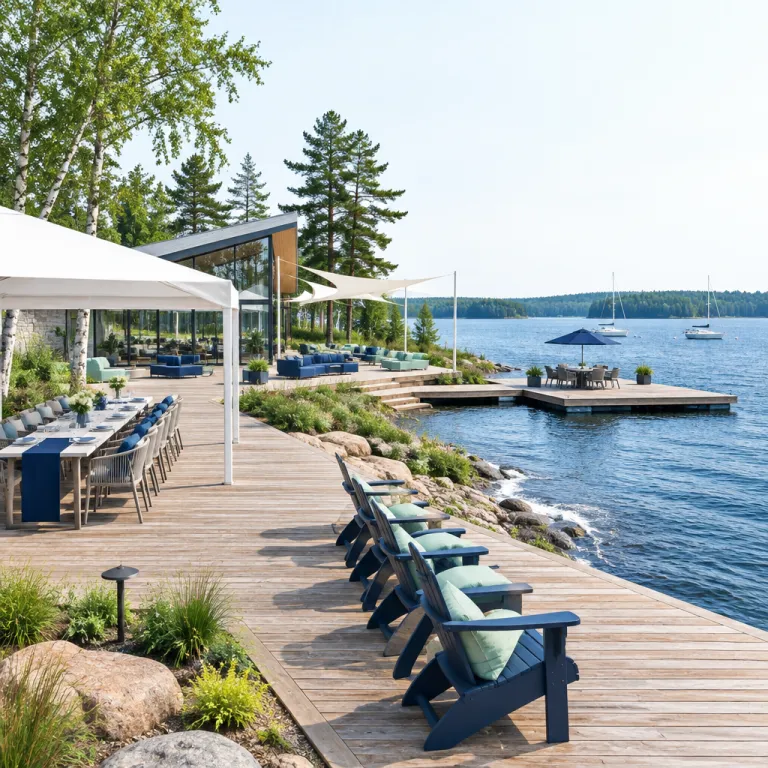
Why Wisconsin’s lakes and lodges suit high level corporate retreats
A well designed corporate retreat in Wisconsin offers a rare blend of privacy, nature, and professional infrastructure. Around every major lake, from Lake Geneva to Elkhart Lake, you find a resort or lodge that understands executive expectations, AV requirements, and complex event logistics. For organisers of salons and professional experiences, this region turns a simple retreat into a strategic platform for leadership alignment and investor relations.
Hospitality decision makers value destinations where a corporate retreat can move seamlessly between plenary meeting spaces, intimate breakout rooms, and informal networking by the water. In Wisconsin, many lakefront sites were originally conceived as seasonal guest house properties or a main lodge with satellite cabins, which now translate into natural zoning for different groups and teams. This spatial separation helps each group focus on its own agenda while still feeling part of a cohesive corporate retreats programme, especially when supported by clear wayfinding and dedicated event concierges.
For VIP and executive retreat formats, the lakeside setting is more than a scenic backdrop; it becomes a tool for narrative building. A board level team can open the event with a strategy session in a flexible meeting room equipped with dual projection, hybrid meeting cameras, and soundproofing, then shift to a private terrace overlooking Lake Geneva for confidential discussions. When the same teams reconvene in a larger meeting space, the change of scenery reinforces key messages and supports long term retention of decisions by anchoring each milestone to a distinct physical setting.
Lake Geneva and Elkhart Lake: curating VIP and executive experiences
Lake Geneva has long been a reference point for any corporate retreat in Wisconsin that targets senior leadership and high value partners. A Geneva resort with a full service profile can combine a lakeside spa, fine dining, and high specification meeting spaces in one coherent site, which is crucial when you host international investors or technology partners. For organisers of salons and roadshow style events, this concentration of services reduces transfer times and keeps the corporate groups focused on content while still offering discreet leisure options between sessions.
On Lake Geneva, properties such as Grand Geneva Resort & Spa or Geneva National Resort & Club illustrate how a lakefront resort can stage both large corporate retreats and intimate executive retreat formats. Their meeting space portfolios often include a main lodge style ballroom for 300–500 participants, mid sized rooms for product salons of 40–80 guests, and smaller rooms for board meetings of 10–20 people, all supported by on site spa facilities. This allows a single corporate retreat to segment experiences for sales teams, C level executives, and key clients without leaving the property, while standard AV packages typically cover HD projection, ceiling mounted speakers, and high bandwidth Wi‑Fi for hybrid sessions.
Elkhart Lake, anchored by The Osthoff Resort and the historic Siebkens Resort, offers a different but complementary profile for a corporate retreat in Wisconsin. Here, the atmosphere is more village like, with a mix of lodge buildings, guest house style accommodations, and direct access to the lake for team building activities. When planners design high impact corporate retreat ideas for VIP and executive hospitality experiences, Elkhart Lake’s walkable layout and concentrated meeting spaces make it easier to orchestrate progressive networking moments across the event, such as rotating dinners that move from a lakeside terrace to a private dining room and then to a fireside lounge.
Iconic properties: from the American Club to Wisconsin Dells spa retreats
Some Wisconsin properties have become benchmarks for executive retreat design because they combine heritage, service, and advanced meeting infrastructure. The American Club in Kohler is a prime example, transforming a former company lodging complex into a luxury resort with refined rooms, multiple restaurants, and a renowned spa. For corporate retreats that need both gravitas and comfort, this site offers a powerful narrative about industrial legacy and modern innovation, reinforced by curated tours of the Kohler Design Center and golf experiences at nearby championship courses.
In the Wisconsin Dells area, venues such as Sundara Inn & Spa and several full service resorts specialise in wellness oriented corporate retreats. Sundara Inn positions itself as an inn spa retreat with a strong focus on silence, nature, and hydrotherapy, which suits executive teams seeking deep reflection away from trade show noise. When a corporate retreat in Wisconsin Dells integrates wellness sessions into the meeting agenda—such as 60 minute guided meditation blocks or hydrotherapy circuits scheduled between workshops—participants often show higher engagement during strategy workshops and product roadmap discussions, according to feedback shared by regional planners and resort post event evaluations.
For longer professional stays linked to salons, touring expos, or seasonal events, planners increasingly look at mid term accommodation models. Understanding what a mid term rental is and how it is reshaping professional hospitality stays helps you combine classic resort rooms with serviced apartments or extended stay guest house units on the same site. This hybrid approach allows a corporate retreat to host core teams in the main lodge while housing rotating exhibitors, trainers, or technology partners in more independent spaces, often with kitchenettes and dedicated workstations for late night preparation.
Designing meeting spaces and lakeside layouts for high impact programmes
Effective corporate retreat design starts with a precise mapping of meeting spaces and circulation flows across the resort. A main lodge ballroom can host plenary sessions, while adjacent rooms become flexible meeting spaces for workshops, product demos, or investor briefings. When these spaces open onto terraces or lawns facing the lake, you gain natural extensions for informal networking and private conversations, with outdoor firepits and covered patios serving as semi structured breakout zones.
For organisers of salons and professional experiences, the goal is to choreograph how each team and group moves through the site during the event. Executive retreat participants might begin their day in a quiet inn spa wing for mindfulness, then cross a garden to join a high energy product salon in a different meeting space. This physical transition signals a change of mindset and helps teams compartmentalise strategic thinking, creative ideation, and commercial negotiations, especially when supported by clear signage, staggered start times, and pre briefed facilitators.
Wisconsin resorts with a campus style layout, such as those around Lake Geneva or Elkhart Lake, often include a mix of lodge buildings, guest house clusters, and standalone pavilions. These configurations allow you to assign specific zones to different groups, such as technology partners, investors, or internal teams, while still keeping everyone within a short walking distance. When the site also offers indoor spa areas and sheltered outdoor spaces, the corporate retreat programme remains resilient to weather without losing its lakeside character, and AV teams can pre rig both indoor and outdoor locations to minimise changeover times.
Elevating team building and experiential hospitality around the lake
VIP and executive audiences expect team building activities that respect their time and status while still creating genuine connection. A corporate retreat in Wisconsin can leverage the lake environment for curated building activities such as guided kayaking, small boat regattas, or shoreline hikes with strategy prompts. These formats work especially well for cross functional teams that rarely meet outside large salons or digital platforms, and they can be framed as 90 minute modules that fit neatly between morning plenaries and evening receptions.
On Lake Geneva, planners often combine morning meeting sessions in a Geneva resort with afternoon team building on the water, followed by a private dinner in a main lodge style dining room. This rhythm allows corporate groups to alternate between high concentration and relaxed interaction, which strengthens trust and accelerates decision making. When the resort’s spa is integrated into the schedule, executives can decompress between intense negotiations and evening networking events, with reserved time blocks for massages, thermal suites, or quiet relaxation lounges.
Across Wisconsin, from the American Club area to Wisconsin Dells wellness properties, the most successful corporate retreats use experiential hospitality as a strategic tool. Yoga sessions, guided forest walks, or curated wellness programmes echo the broader trend of experiential retreats highlighted in analyses of how Indian yoga retreats are reshaping experiential hospitality events. For organisers of salons and expos, these examples show how to move beyond standard cocktail receptions toward immersive experiences that align with brand values and leadership culture, such as chef led tasting menus that tell a regional sourcing story or fireside storytelling sessions with founders.
Practical considerations for organisers, exhibitors, and hospitality investors
Planning a corporate retreat in Wisconsin for VIP and executive audiences requires early alignment between organisers, resort operators, and technology partners. Room inventory must match the segmentation of groups, from C suite teams in premium rooms near the spa to exhibitor teams in more functional guest house wings. Investors and hotel decision makers should evaluate whether the site’s meeting spaces, connectivity, and service culture can support complex hybrid events linked to larger salons, including dedicated bandwidth for streaming, redundant power, and on site technical support.
For exhibitors and technology partners, a well structured corporate retreat can serve as a high value extension of major trade shows. Hosting an executive retreat at a lakefront lodge before or after a salon allows deeper product demonstrations, private negotiations, and hands on workshops in a quieter setting. When the resort offers full service support, including technical staff, curated F&B, and flexible meeting layouts, partners can focus on content rather than logistics, and can schedule 30–60 minute sessions with decision makers instead of competing for attention on a crowded show floor.
Hospitality investors assessing Wisconsin resorts, lodges, and inn spa properties should pay close attention to how meeting space design and lakeside amenities influence corporate retreat demand. Sites that combine a strong main lodge, multiple breakout spaces, and high quality spa facilities tend to attract repeat corporate retreats from the same teams and groups. Over time, this repeat business stabilises occupancy outside peak leisure seasons and strengthens the property’s positioning in the professional events ecosystem, particularly when supported by dedicated sales teams focused on corporate accounts.
Key statistics shaping corporate retreats and executive hospitality in Wisconsin
- According to Destination Wisconsin and state tourism dashboards, business and group travel contributes a substantial share of overnight stays in major lake regions, with meetings and events helping to smooth seasonality outside peak summer months; for example, statewide business travel spending exceeded $1.4 billion in 2022, with group events identified as a key driver of shoulder season demand (see Wisconsin Department of Tourism annual reports for detailed figures).
- Data from the U.S. Travel Association indicates that companies investing in in person meetings and retreats report higher employee engagement scores than those relying mainly on virtual formats; its “Future of Meetings” analyses note that roughly 80% of executives believe face to face meetings are irreplaceable for complex decision making, underlining the strategic value of well designed corporate retreats (see U.S. Travel Association meeting industry research).
- Industry reports on wellness tourism, such as the Global Wellness Institute’s “Global Wellness Economy” study, show that wellness travel has been growing at more than 6% annually—nearly twice the rate of overall tourism in recent years—which supports the positioning of Wisconsin’s inn spa and resort properties for executive retreat demand (see Global Wellness Institute sector breakdowns).
- Meeting Professionals International surveys highlight that planners increasingly seek destinations offering both robust meeting infrastructure and outdoor activities; in recent MPI polls, more than 60% of respondents rated access to nature and wellness amenities as “very important” for site selection, a combination that aligns closely with Wisconsin’s lakeside resorts and lodges (see MPI meetings outlook reports).
FAQ about corporate retreats and VIP executive experiences in Wisconsin
What makes Wisconsin suitable for high level corporate retreats ?
Wisconsin combines accessible locations with lakeside resorts, historic lodges, and modern spa properties that offer serious meeting infrastructure. This mix allows planners to host strategy sessions, salons, and executive retreats in one coherent site. The natural environment around the lakes also supports high quality team building and informal networking, with many properties offering private docks, wooded trails, and year round wellness facilities.
How should I choose between Lake Geneva, Elkhart Lake, and Wisconsin Dells ?
Lake Geneva suits larger corporate retreats and VIP events that need extensive meeting spaces and upscale services, including ballrooms, multiple breakout rooms, and advanced AV. Elkhart Lake offers a more intimate, village style setting ideal for executive retreats and focused leadership programmes that benefit from walkability. Wisconsin Dells is particularly strong for wellness oriented retreats and incentive style events that integrate spa and nature experiences, especially for teams that want to combine strategy work with restorative time.
Which types of properties work best for VIP and executive audiences ?
Executive audiences respond well to properties with a strong sense of place, such as historic main lodge resorts, refined inn spa venues, or architecturally distinctive guest house complexes. These sites should provide high specification meeting rooms, reliable technology, and discreet service. A robust spa and wellness offer is increasingly considered essential rather than optional, particularly for multi day leadership programmes.
How can organisers integrate exhibitors and partners into a corporate retreat ?
Organisers can dedicate specific meeting spaces or lodge wings to exhibitors and technology partners, creating mini salons within the retreat. Structured demos, private consultations, and small group workshops work better than large trade show style booths. Clear scheduling ensures that executives have time for both strategic sessions and partner interactions, and pre arranged AV setups help partners deliver consistent, high quality presentations.
What lead time is recommended for planning a lakeside corporate retreat in Wisconsin ?
For VIP and executive retreats at sought after lakeside resorts, a lead time of nine to twelve months is advisable, especially if you need a large block of rooms and multiple meeting spaces. Smaller groups using a single lodge or guest house wing may secure dates with shorter notice, but flexibility on timing helps. Early planning also allows better integration of team building and wellness activities around the lake, as well as advance coordination of transportation, AV, and on site staffing.